

It’s the time of year where I get to talk about all my favorite movies for my “Best of 2025” list. I wanted to cap off the year with something here as well and figured instead of presenting that same list again in written form, it would be more fun and interesting to curate a list all the other great stuff I found in 2025.
So here’s a casual overview of some of the most interesting, beautiful, strange, and noteworthy things I encountered this year (though not necessarily things made or published in 2025). In no particular order.
[Experimental Short Film] Wasteland No. 3: Moons, Sons by Jodie Mack

Beautiful contemplation of plant material and decay. I was lucky enough see this screened live. You can view the 5 minutes silent film on Jodie’s website. Combines cinema with the art of flower arrangement.
[TV Program] Big Media in America (1959)
Found doing research for my video on how cinema has changed, I was enthralled by this TV program from 1959 titled “Big Media in America.” It’s a panel discussion between 5 students that examines questions like: “Has the big media in America been cheapened by its manipulation to the lowest common denominator? Is the media limited to the sensational and the exploited?”
We should have more of this these days! There should be roundtable discussions among Gen-Z academics about media theory (if there are and I just don’t know about them please point me in that direction).
[Book] Meditations for Mortals
I had one of the busiest years of my life in 2025 and one side effect was that I did less reading than I typically do, but I started the year off with Oliver Burkeman’s Meditations for Mortals and it laid a solid foundation for the year. Burkeman’s work, starting with 4000 Weeks, has been incredibly helpful to me in deprogramming from hustle/grind/optimization/self-help culture I fell into at a young age (I was first exposed to Gary V at 14).
I don’t remember very many specifics from the book, but I took away from it the permission to accept imperfection rather than strive for optimization, and in applying this (maybe coincidentally) had one of the most productive years of my life.
The best concept from the book that I do think about regularly though is to shift from thinking about your “watchlist” or “to-read list” as a to-do list to thinking about it as a “river of high-quality material that you can dip into whenever you like.” It’s a small change in mentality that’ accepts the impossibility of actually watching it all and it makes collecting media recommendations feel like less of a chore.
If you haven’t read it, it’s a fantastic way to start your new year.
[Podcast] Ólafur Arnalds is a guest on Derrick Gee’s podcast “Solid Air”
Host Derrick Gee invites guests over to his house to play him music on Solid Air, a radio show for the internet era. This episode in particular is beautiful, features some amazing music and great stories. I was not expecting it to make me cry multiple times.
[Article] Are modern movies using flatter lighting than in the past?
While there’s much talk and theorizing about what is different about the look of movies now (we can all feel it, but what really is the cause?) Film researcher Stephen Follows crunches a bunch of data to try to answer the question, and discovers that… it’s complicated. Great if you love nerdy data about film.
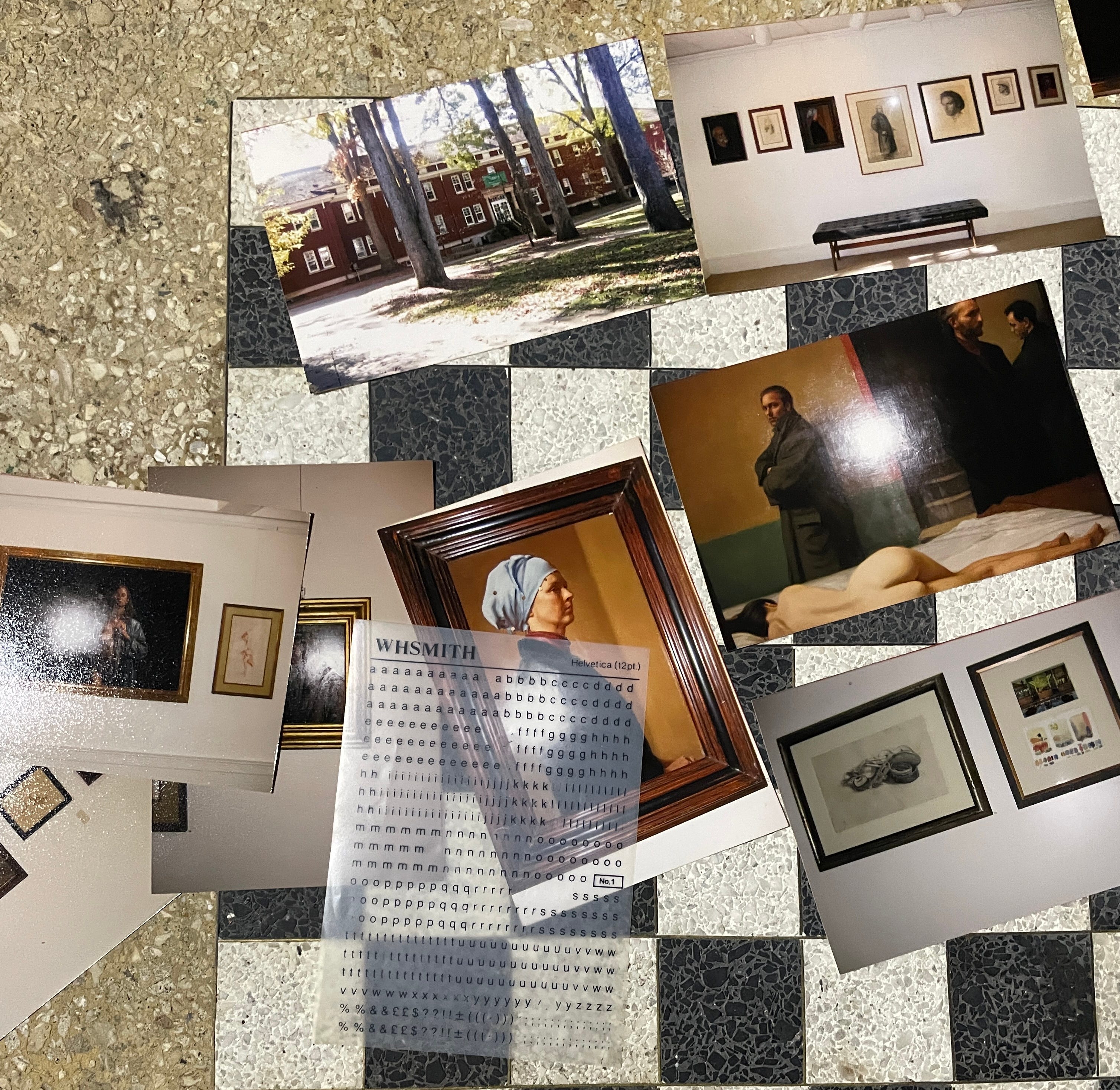
[Photo] Random flat-lay of printed photos I found on a chess board at the park.
[Video] Rare 17-minute interview with Thelma Schoonmaker (1993)
I was delighted to come across this fantastic conversation Thelma Schoonmaker, Martin Scorsese’s longtime editor and one of the greatest editors of all time. She rarely does interviews and often downplays her work, so it’s nice to hear some insight into her process.
[Article] If Your World Is Not Enchanted, You’re Not Paying Attention
L. M. Sacasas on how to enchant your world by improving the quality of your attention.
[Painting] A Rose (1907)
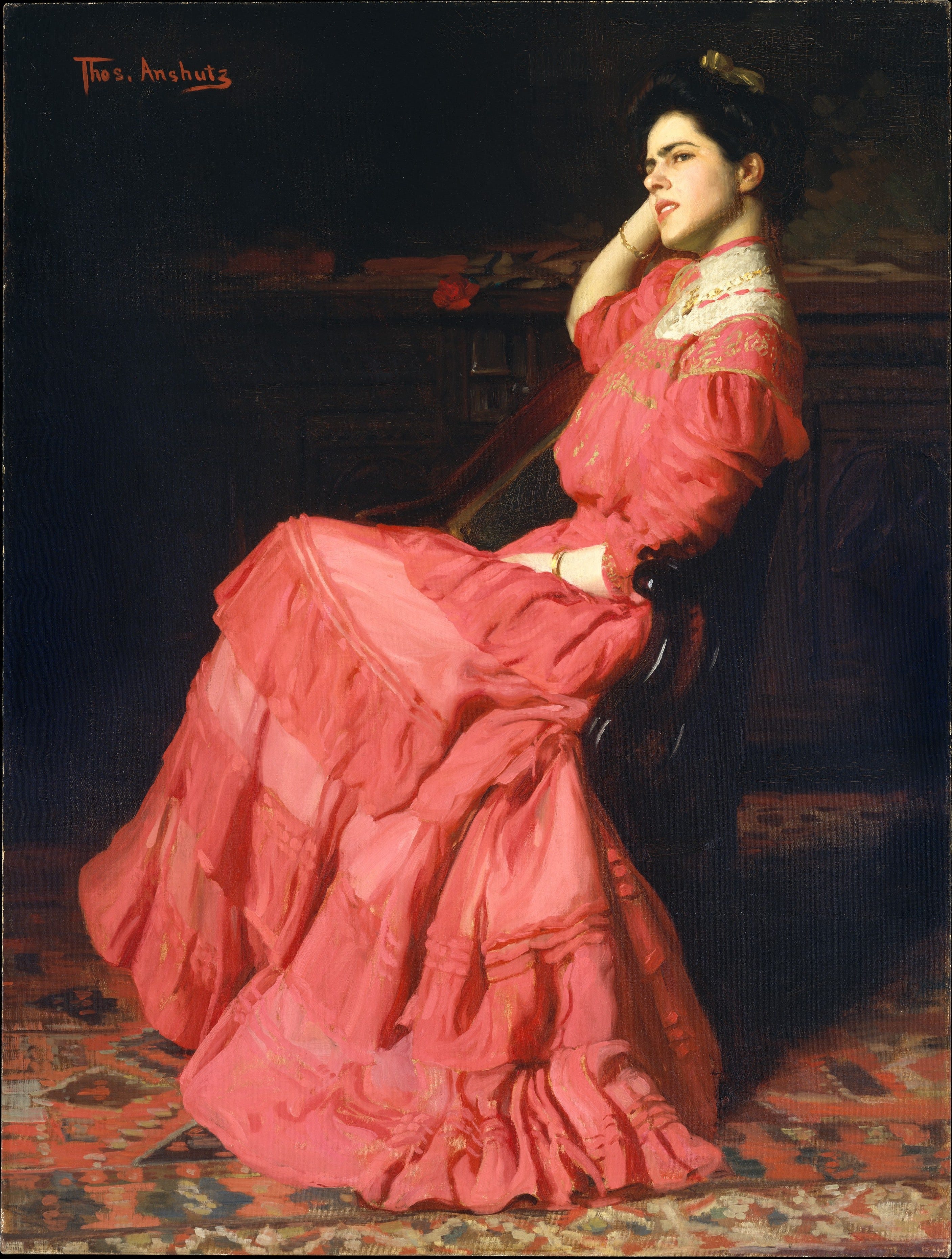
One of my favorite paintings I’ve come across this year is this one by Thomas Anshutz. The detail work and color in the dress is incredible. Her expression is what makes it though. It feels like a reaction shot from a scene in a Jane Austen adaptation. I want to know the story.
[Video] Drinking In Rural China for Beginners
Mike Okay’s travelogues are one of my favorite recent YouTube discoveries. Mike’s ability to connect with seemingly anyone even when he doesn’t speak a work of their language is impressive. He shows us the beauty, hospitality and humanity of many rural cultures that rarely get featured in western media, and handles the difficult balance of being honest about the conditions of the places he visits, while being respectful toward the people he encounters and avoiding an exploitative frame. “Drinking in Rural China for Beginners” was how I found his channel, and is not a bad place to start.
[Book] A Paradise Built in Hell by Rebecca Solnit
When flooding from Hurricane Helene devastated a large part of Western North Carolina where I live, I was struck by the incredible process of community bonding and mutual aid that took place in the storm’s wake. This book is about that phenomenon, which often takes place after disasters, and which is generally under-reported by the media. It’s this book that helped me understand the narrative I had discovered while making my documentary Out of a Flood.
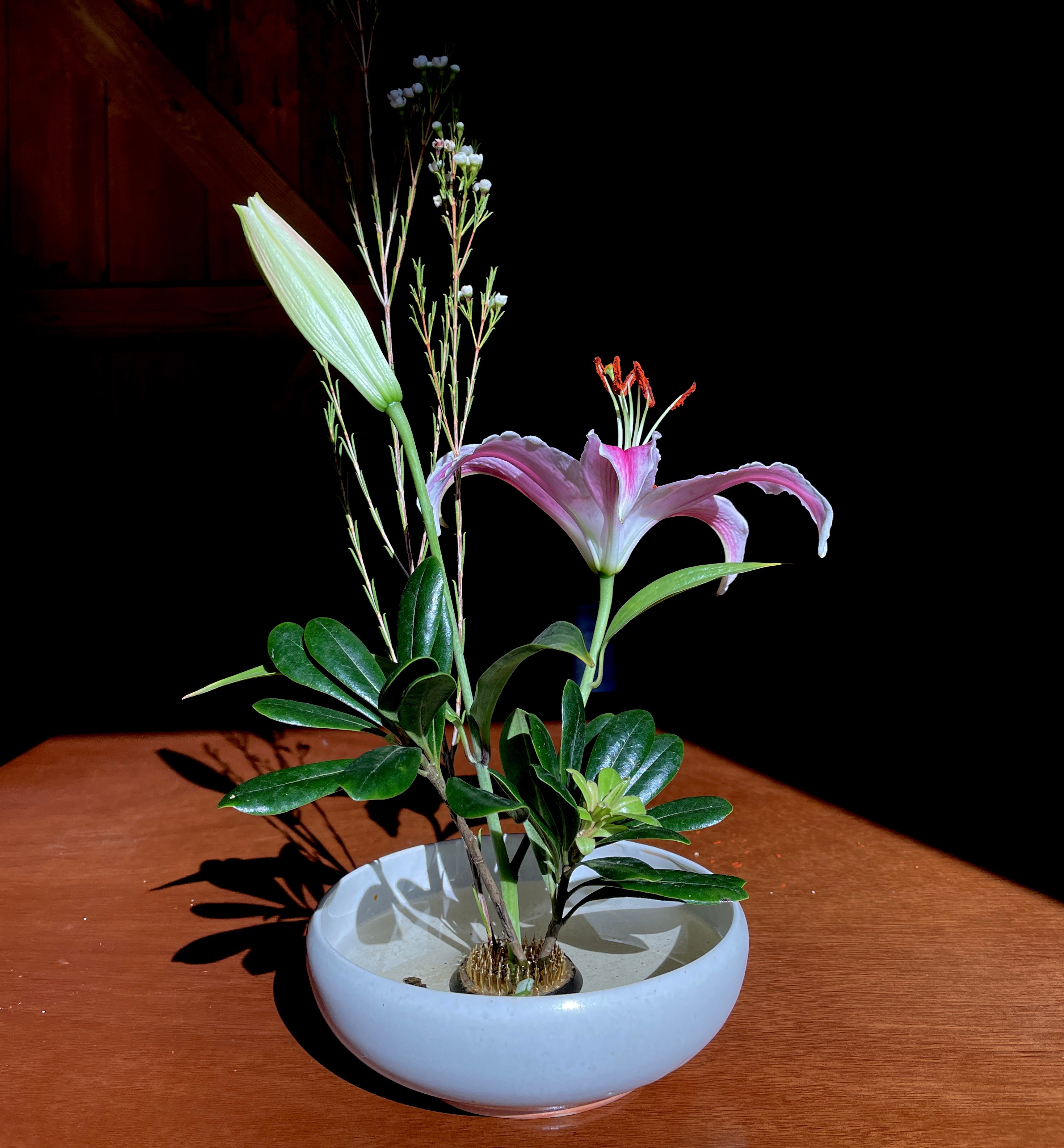
[Practice] Ikebana
[Article] The Zen TV Experiment
Notes from Bernard McGrane on TV and how to approach it meditatively to learn different things about the medium.
In one exercise he asked students to look at a blank TV for 30 minutes:
One expression of this anger that comes up repeatedly is "I wasted 30 minutes of my time." Is it possible that this is a very valuable waste of time? Is it possible that "wasting time" is a very valuable thing to do in studying society?
[Video] Richard Kind - The Adam Friedland Show
While the bit occasionally wears thin, The Adam Friedland Show is one of the best swings at a genuine YouTube talk show that isn’t food-based. Friedland shines when he’s chatting with actors that don’t get as much of the spotlight as they deserve like in this episode with guest Richard Kind or this one with William H. Macy.
[Article] People are “writing for the AIs” now
Some people are now writing explicitly with the idea that the writing will become part of the training material for future AI models. Scott Alexander gives a breakdown of some of the how and why. I do not endorse this behavior, but I note these examples of how quickly we’ve entered a very strange reality with a kind of anthropological curiosity.
[Podcast ] AI discusses “ AI discusses “AI discusses document that just says “Poopoo Peepee” “ “
Is what it says it is, recursive surrealism generated using Notebook LM’s feature that lets you generate an “AI podcast” that discusses any video or document. Good reminder that LLMs are first a foremost, skilled bullshit generators.
[Video] Straight Line
Mash together an episode of High Maintenance and I Think You Should Leave and you’ve got: whatever this is. Part of the Internet New Wave.
[Video] Silent Hiking The Himalayas for 16 days
Part meditation, part travel documentary. Incredible cinematography. Is this also part of the Internet New Wave, albeit a very different genre?
[Photography] Farm Security Administration/Office of War Information Color Photographs
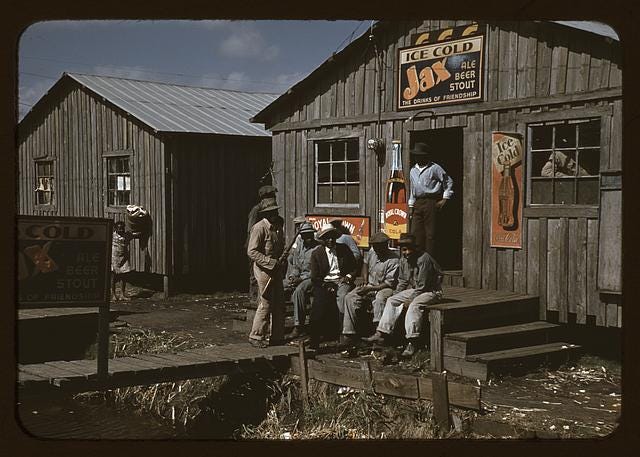
Research for my video on the cinematography of Sinners lead me to the FSA photography archive on the Library of Congress website. I hadn’t seen this collection previously, and love browsing through high-quality historical archives.
[Book] Reclaiming Art in The Age of Artifice by J.F. Martel
Helped me make sense of the role art has played for humanity throughout are existence, and how we stay in touch with that in the face of advertising, propaganda, and now AI generated media. Was very influential on the video I made this year about “AI art.”
Donna Tart’s introduction for the new edition of the book is also worth your time:
“Art with a capital A—is all too often viewed as an antiquated construction ensconced behind velvet ropes, not very relevant except as a standing resource to be boiled down to blunt cultural agendas, picked apart by theory, aped by predictive formulas, pillaged and parodied for commercials and computer software, if not ignored altogether in the glitz of technological stimulus…
“But Martel’s definition of Art with a capital A extends beyond the gilded category of fine arts. He casts it as an uncanny force bursting into the world in earliest prehistory, less a theoretical construct or byproduct of culture than a slant of light streaming into our world from elsewhere. Like dream, it gives us access to parts of the psyche and even of society that we might not otherwise be able to see; like prophecy, it has potential to burn through all the managed and multilayered cultural fictions that surround us and to awaken us from our pervasive sense of unreality. And as our world degenerates around us into pixels, Martel maintains that one of our oldest and most human ways of knowing might also be our best hope of negotiating the present moment without being destroyed by it.”
[Short Film] Morning Routine
Great cinematography, cheeky script. One of those cinematic gems you find on YouTube from time to time. The YouTube algorithm tends not to reward this kind of work, but I’m always happy to find it. Directed by Nur Niaz.
[Propaganda] The Political Art of Jon McNaughton
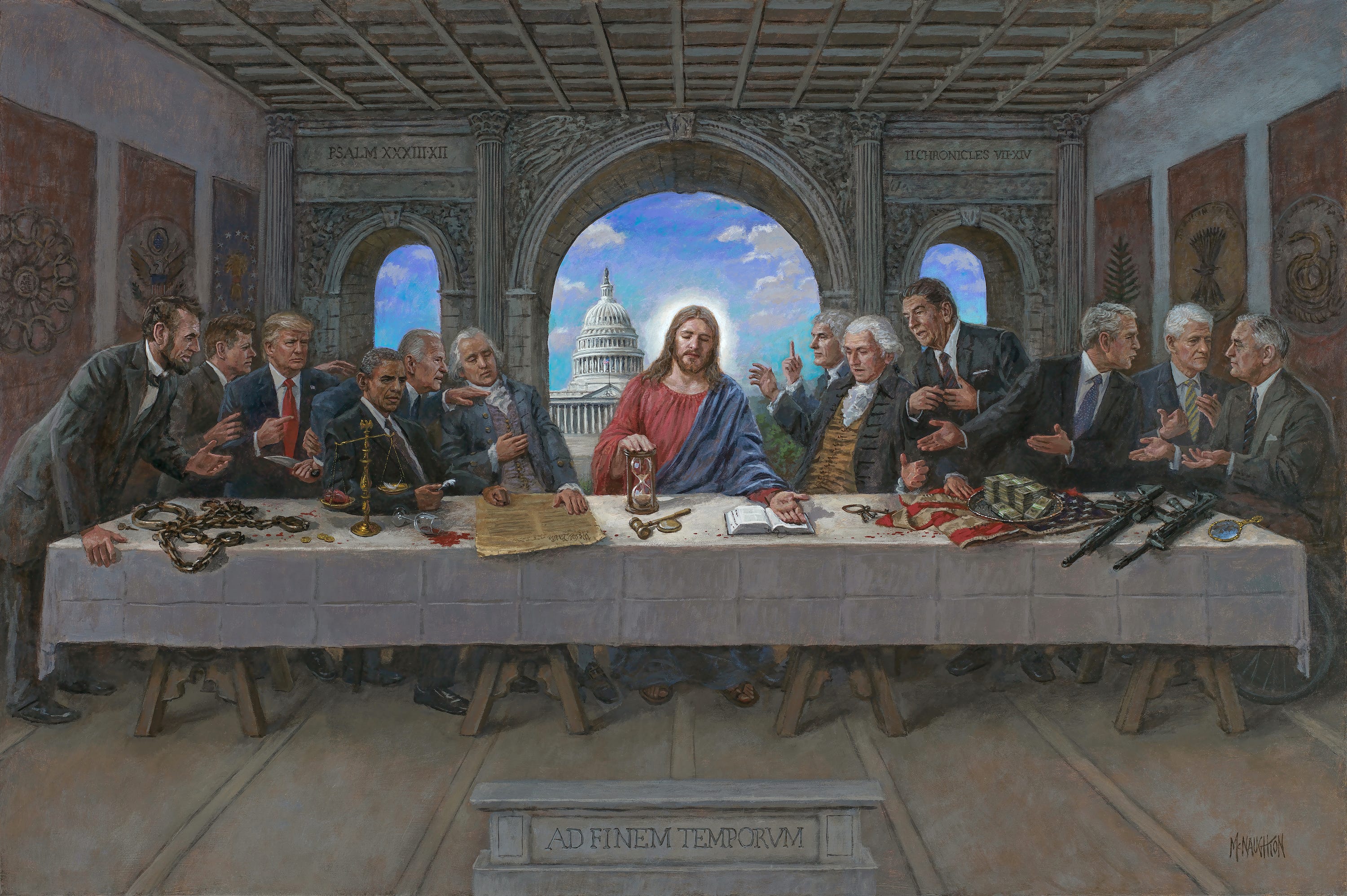
Some artists eschew subtext for… just saying the quiet part out loud. Completely sacrilegious, but also it would be almost impossible to tell just from the image alone if this was satire or not. (Spoiler alert: it is not). Obviously I don’t endorse the content but there’s something strangely fascinating about this work that helps you understand the psyche of American Christian Nationalism.
Propaganda is often just as revealing and informative as Art if you know what you’re looking at.
[Book] The Magic Hours: the films and hidden life of Terrence Malick
I thoroughly enjoyed the new biography of Terrence Malick from John Bleasdale. Sly bit of self-promotion: my review of the book was published this year in the New Review of Film and Television Studies. Since I wrote the review John and I have connected and I’ve also made a few appearances on his podcast.
[Video] Tristan Spohn invites acting students at different levels of experience to recreate a scene from La La Land.
Really helps illustrate the nitty gritty of what makes performances great. The devil is in the details. Fun to see this kind of direct comparison.
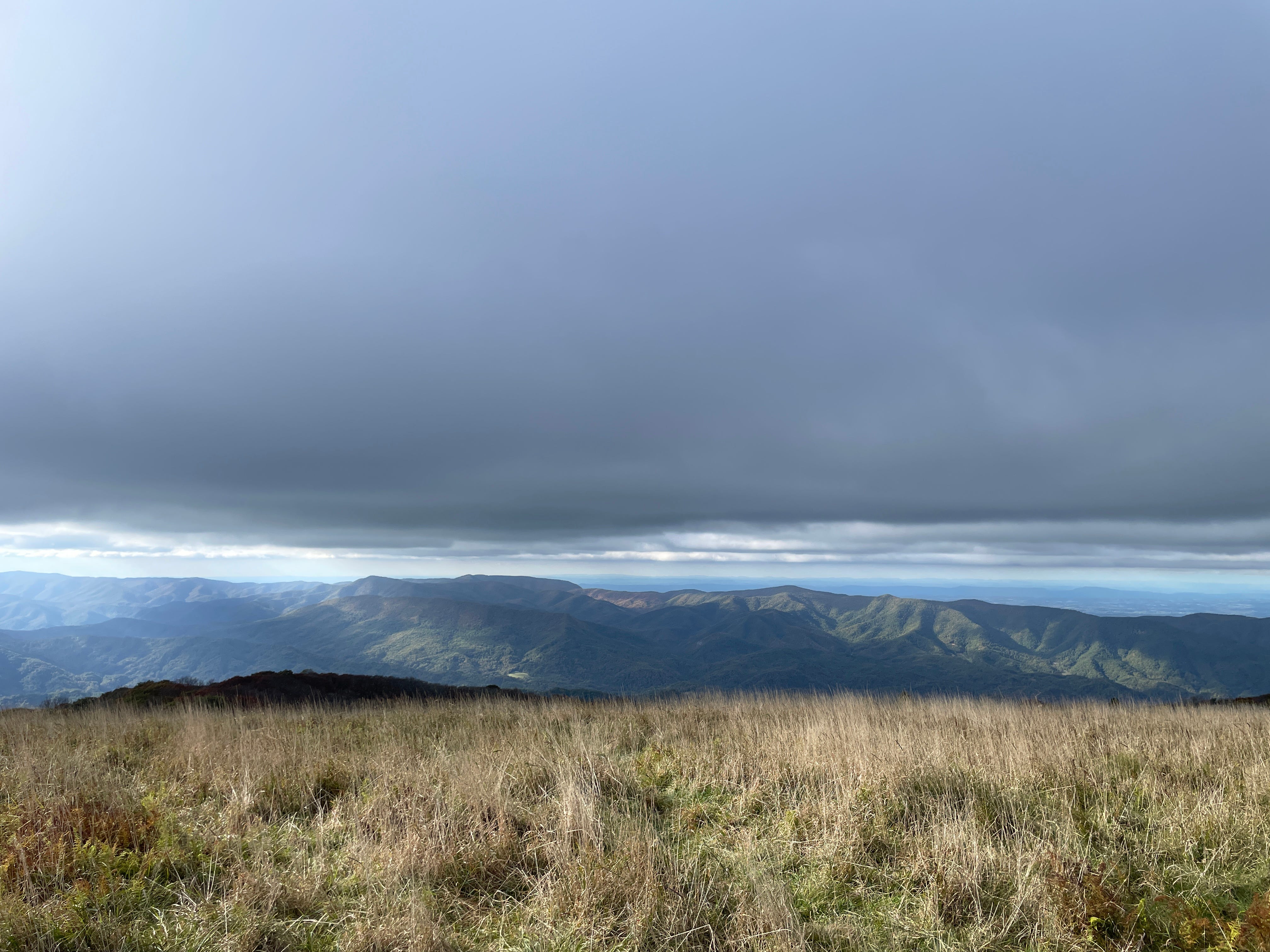
[Place] Big Bald, NC
Sometimes one of the most beautiful places you’ve seen in your life is only an hour from where you live and all you have to do is walk up a small mountain to see it.
[Video] Your Journey into Analog Glitch Art
Beautiful video showcasing the world of analog glitch art. This is the kind of retro-nostalgia I’ll endorse.
[Speech] Tilda Swinton’s speech at Berlinale 2025
“The inhumane is being perpetrated on our watch. I’m here to name it without hesitation or doubt in my mind. And to lend my unwavering solidarity to all those who recognize the unacceptable complacency of our greed addicted governments who make nice with planet wreckers and war criminals wherever they come from.
I’m also here to name my absolute personal faith in culture in resistance. An enlightened cinema can inspire a civilized world, can lend us the pause, the breath, the reflection that might embolden us to take the best part of ourselves. That capacity for enchantment and openness, for wit and intrigue, that admiration for human flexibility and resource. Our capacity to survive things, for thrill and sensation that we find in the witness that cinema represents and build on it out in the open and under the sky.”
I recommend you watch it in full.
[Art] John Atkinson Grimshaw: Painting Moonlight
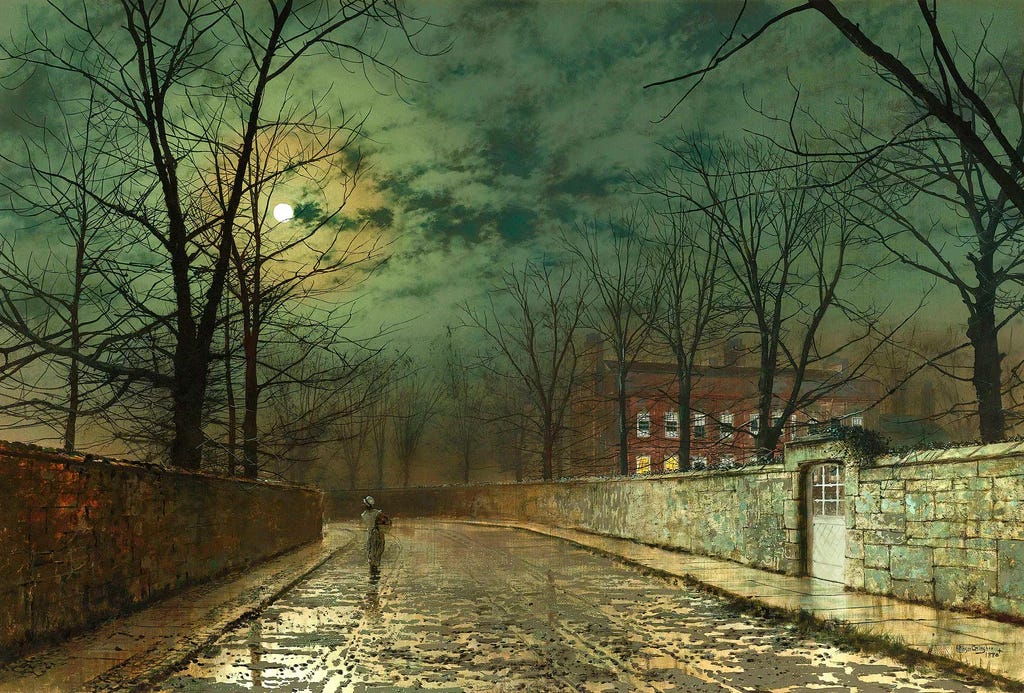
I’ve been truly enthralled by how painter John Atkinson Grimshaw features moonlight in his paintings.
[Podcast] David Perell’s Interview with Richard Powers
David Perell’s podcast, How I Write, has been a new favorite this year. In depth conversations with a variety of prominent authors, about the practice and craft of writing. Richard Powers is the author of The Overstory, one of my favorite books, so this episode in particular was a treat.
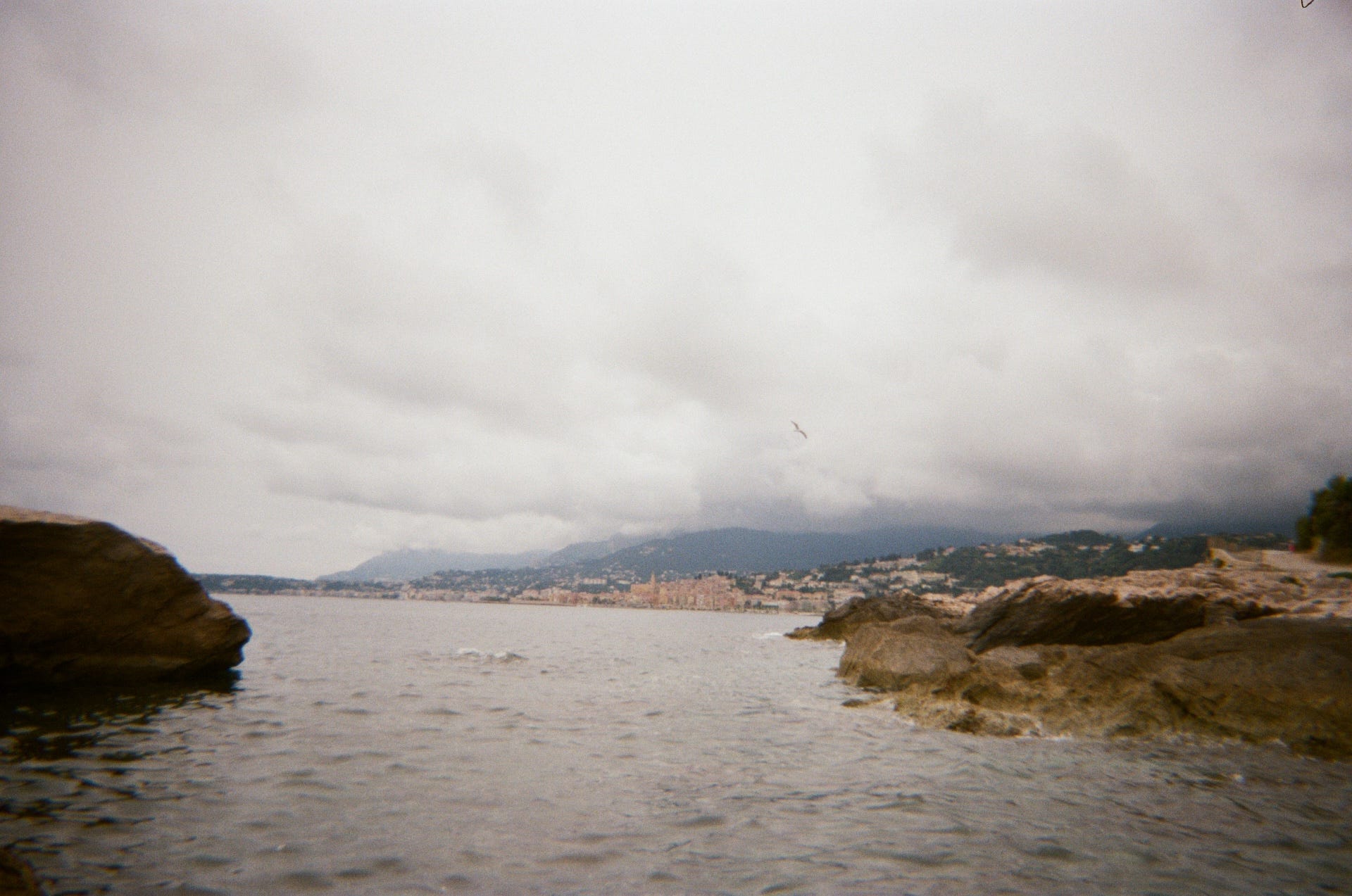
[Place] Balzi Rossi, Italy
Exit the train in Menton, walk to the eastern end of town, cross the border into Italy, go past the small hotel and Michelin star restaurant and down the gravel path a few hundred meters, just before the expensive Resort Bagni there is a small public beach. Bring a picnic, spend the afternoon.
[Article] Olivia Rafferty’s guide to quitting Spotify
Their treatment of artists aside, I’ve also become frustrated by the fact that the UI designers of Spotify increasingly don’t seem to want me to actually listen to music. This guide was helpful and I’ve made the switch to Qobuz, which is a solid service but desperately needs a better name.
[Video] Brigands vs Knight (Real Unchoreographed Duel)
I enjoyed this short film that attempts to simulate medieval era combat as realistically as possible. I can’t vouch for the video’s actual authenticity, but it’s interesting to see a counterpoint to how these types of fights usually play out in movies and TV shows.
[Article] The Oscar Should Go to Bob Ferguson’s 1991 Nissan Sentra SE-R
“--only for another sound to emerge in the clamor: The high-pitched, shitty-exhaust-kit buzz of Bob Ferguson’s four-cylinder. My favorite image in the movie comes around here: A wide shot with the Charger out of focus in the foreground to the right, the Mustang in the middle distance (and middle of the frame) behind it--and there, in the background, suddenly pulling in from the left: A exhilarating little two-door Nissan Sentra. The cavalry has arrived. Sort of.”
One of my favorite pieces of film writing from this year, all about how the little details matter, and a great reminder that A Car is Never Just a Car.
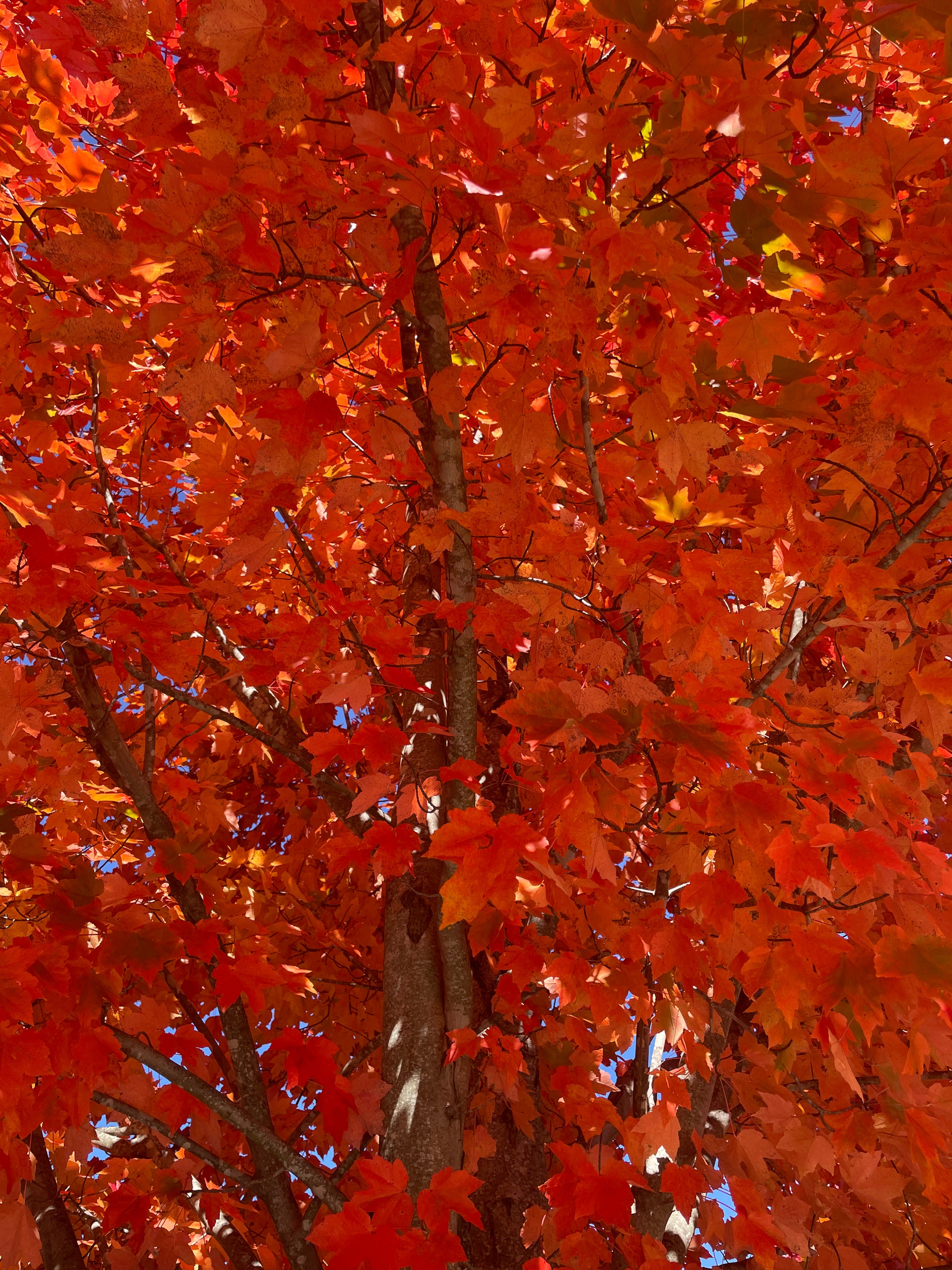
[Photo] The color produced by this maple tree found in a park.
[Paper] Perspective Distortion from Interpersonal Distance Is an Implicit Visual Cue for Social Judgments of Faces
Perspective distortion in photography created by the distance from the subject influences how “trustworthy” the person appears to us. Every little decision a filmmaker makes is significant.
[Article] The Fordham Experiment
(see also) The Fordham Experiment details how subtle changes in how a film is presented effects audience perception. Every part of a medium shapes our perception. The medium is the message.
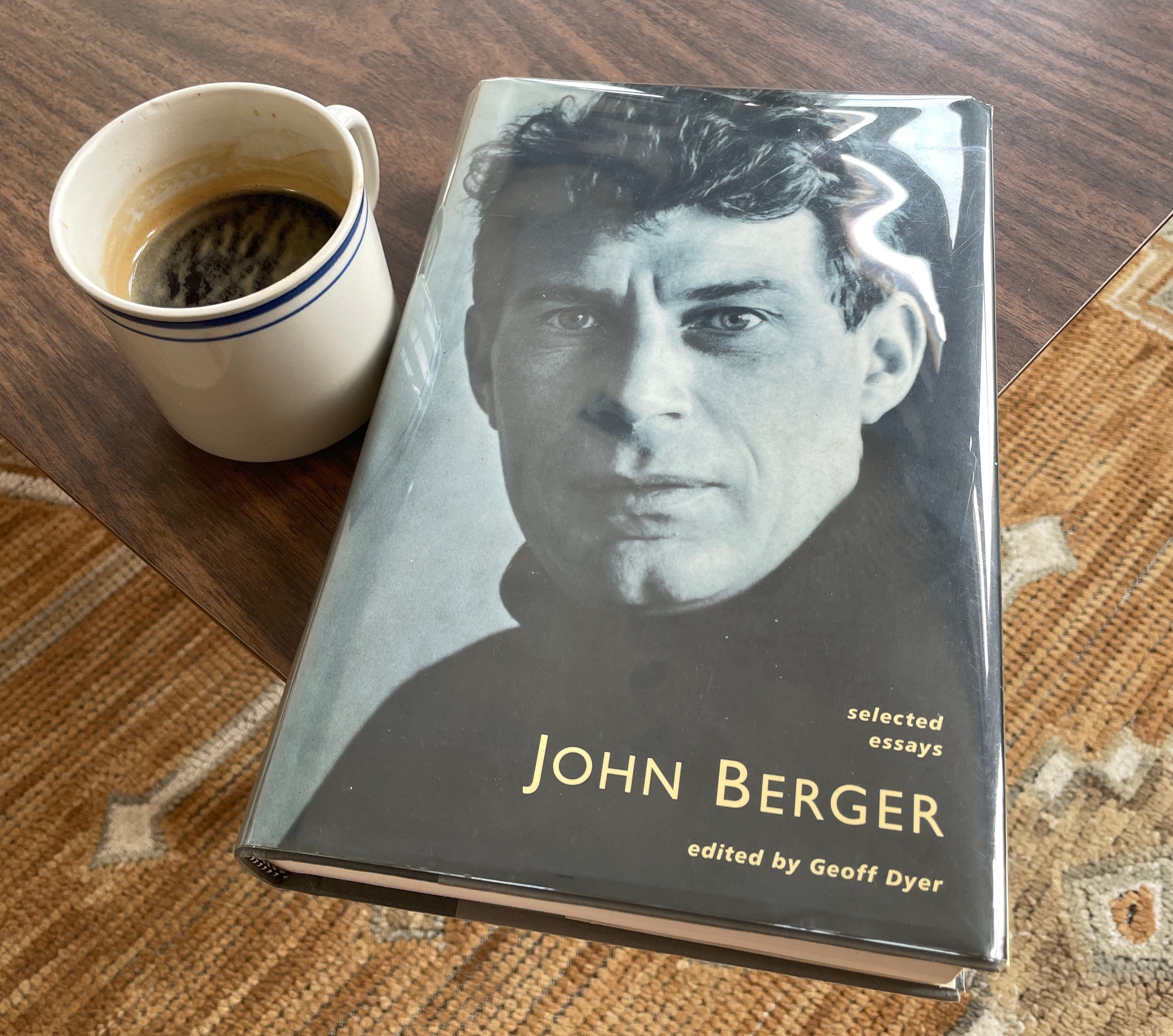
[Book] Selected Essays by John Berger
[Video] Parody of Actor’s on Actor’s by Ryan Micho and Grace Reiter
I love Variety’s Actor’s on Actor’s series when the pairing is good, but this video by comedy duo Ryan Micho and Grace Reiter deftly nails so many of the awkward cliches that exist in celebrity posturing.
[Video] Interior Motives: A Room Investigation Game Show
Host Ben Mora, and two guest contestants look at submitted photos of viewers bedrooms and try to guess their age, location, gender and sexuality. A voyeuristic comedy show that’s like geoguessr for people’s private lives. It’s interesting to explore the ephemera our identities leave behind, and sometimes how you can’t judge a person by the room they sleep in.
[File Under: “I knew it!”] Wet Bias
From Wikipedia: “Wet bias is the phenomenon whereby some weather forecasters report an overestimated and exaggerated probability of precipitation to increase the usefulness and actionability of their forecast.”
[Art] Approaching Thunder Storm (1859)
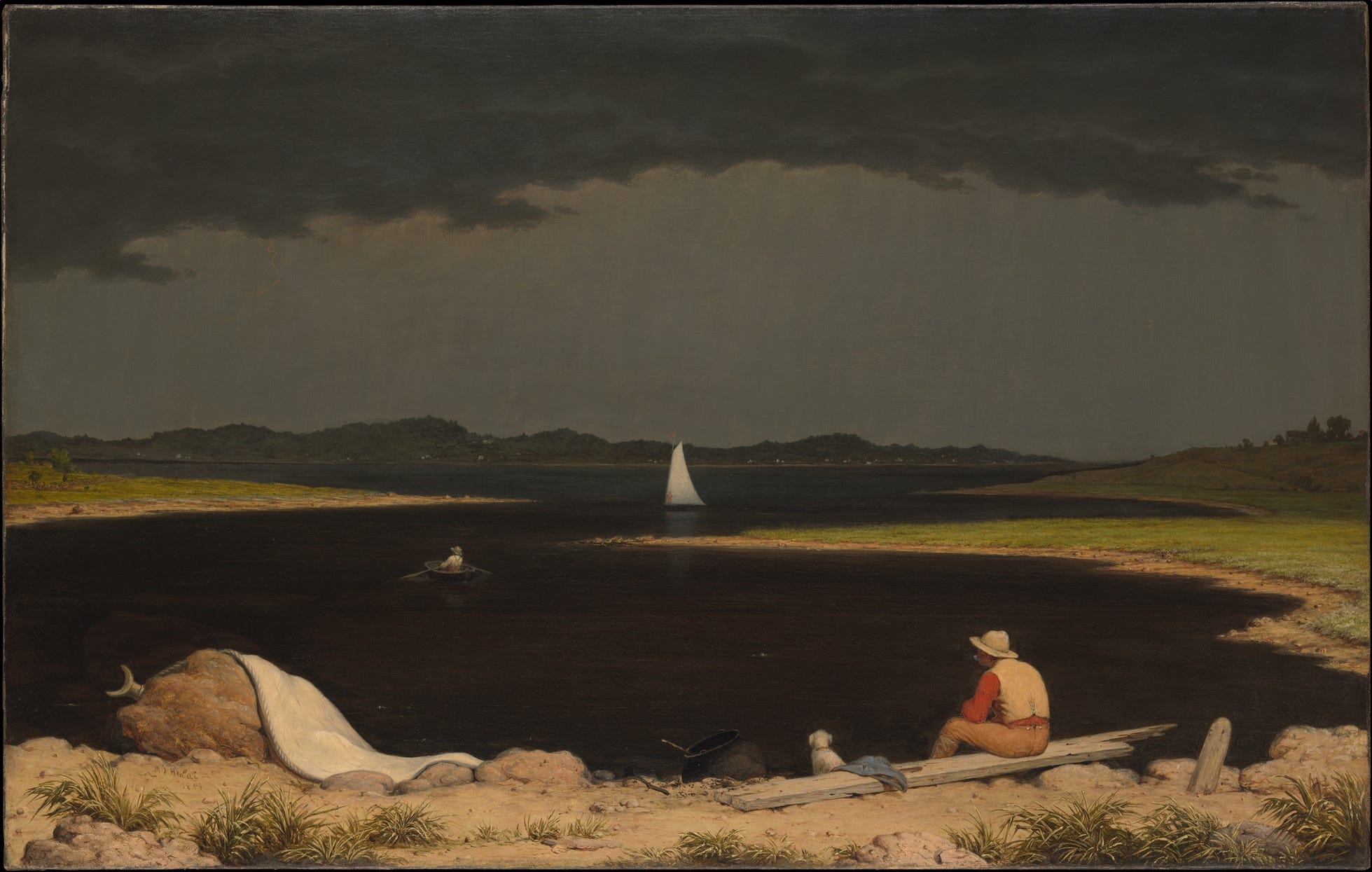
This dramatic landscape by Martin Johnson Heade has such an incredible mood. I love the little dog.
[Article] Vince Gilligan Warns Against Glamorizing Villains
The creator of Breaking Bad, Better Call Saul (and now Pluribus) reflects on the unintended aspirational nature of anti-heroes and calls for more “good guy” protagonists. Does Gilligan really regret Breaking Bad to some extent? Carol, the main character of Pluribus is not a straightforward hero, but certainly less problematic than any of Gilligan’s leads in the past. Also Pluribus is a great show and worth a watch.
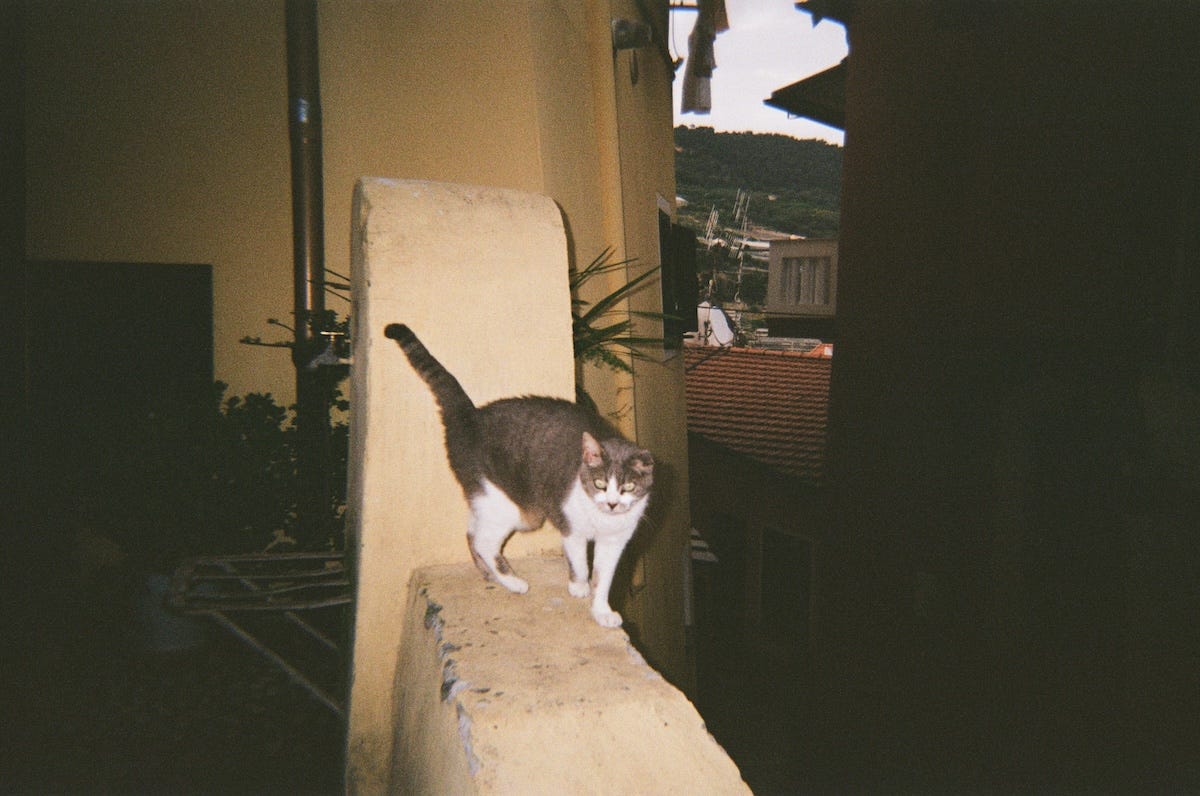
[Photo] This cat in the streets of Ventimiglia, Italy
That’s a wrap for 2025. Happy New Year.
While the majority my written essays are available for free, becoming a paid subscriber will encourage me to spend more of my time writing.
A wonderful collection and a really great subtitle for it all too. Thanks for sharing.
Love the phrasing "A car is never just a car". I've been having similar thoughts lately: "It doesn't JUST rain" and "One doesn't simply look into a mirror".