
He Went To Prison For Directing, Then Kept Making Movies.
Jafar Panahi should be talked about more.

This essay was originally published in video form. If you’d prefer to watch instead of read, you can do so on YouTube or ad-free on Nebula.
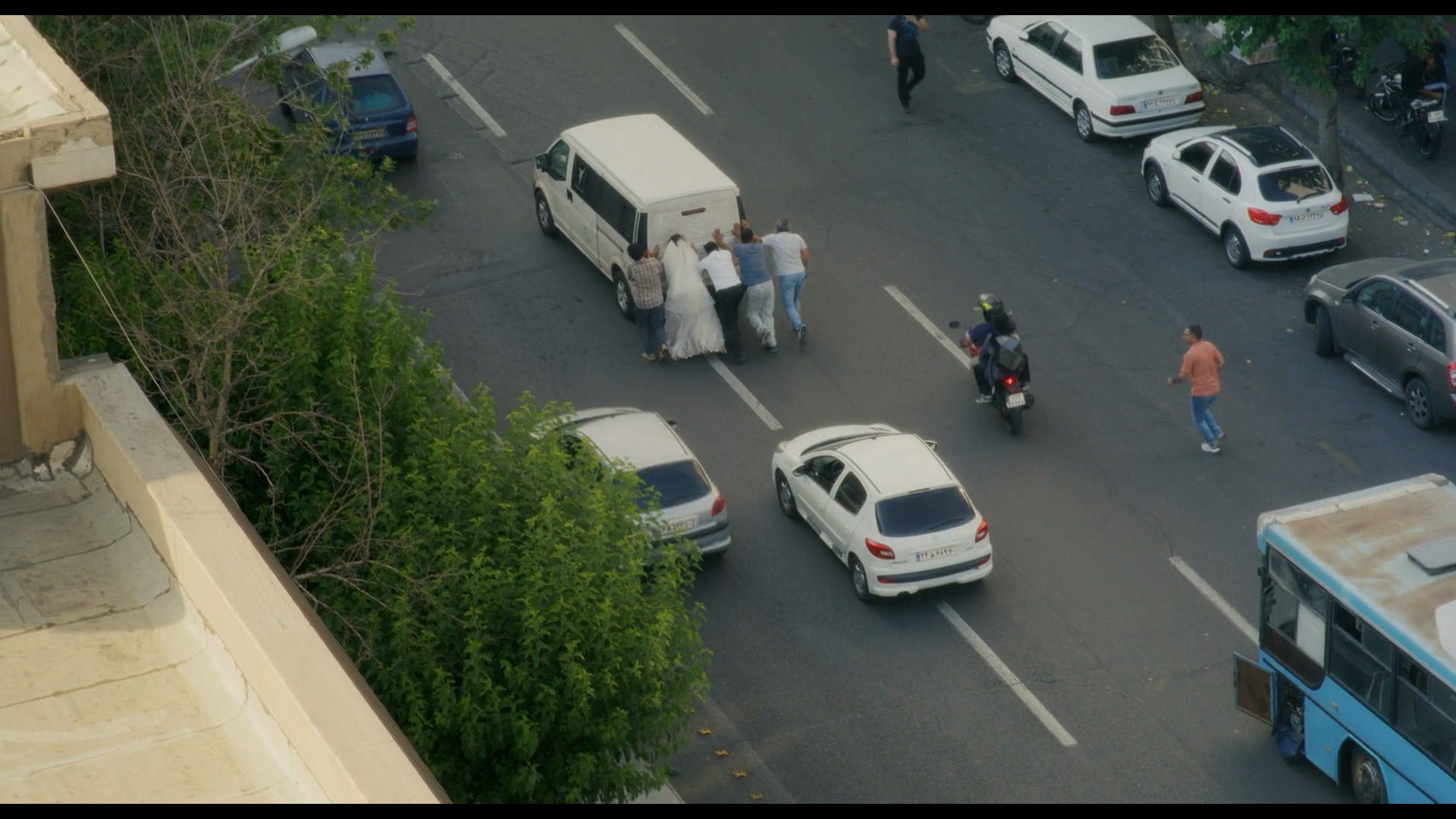
While transporting a man they’ve kidnapped, Vahid’s van breaks down. When they resort to pushing the van through the busy streets of Tehran the scene is shot in an usual way: with the camera hidden on a nearby rooftop.
In another scene Shiva gets out of the car to go speak with someone. As she crosses the street and begins arguing with someone—the camera stays in the van.
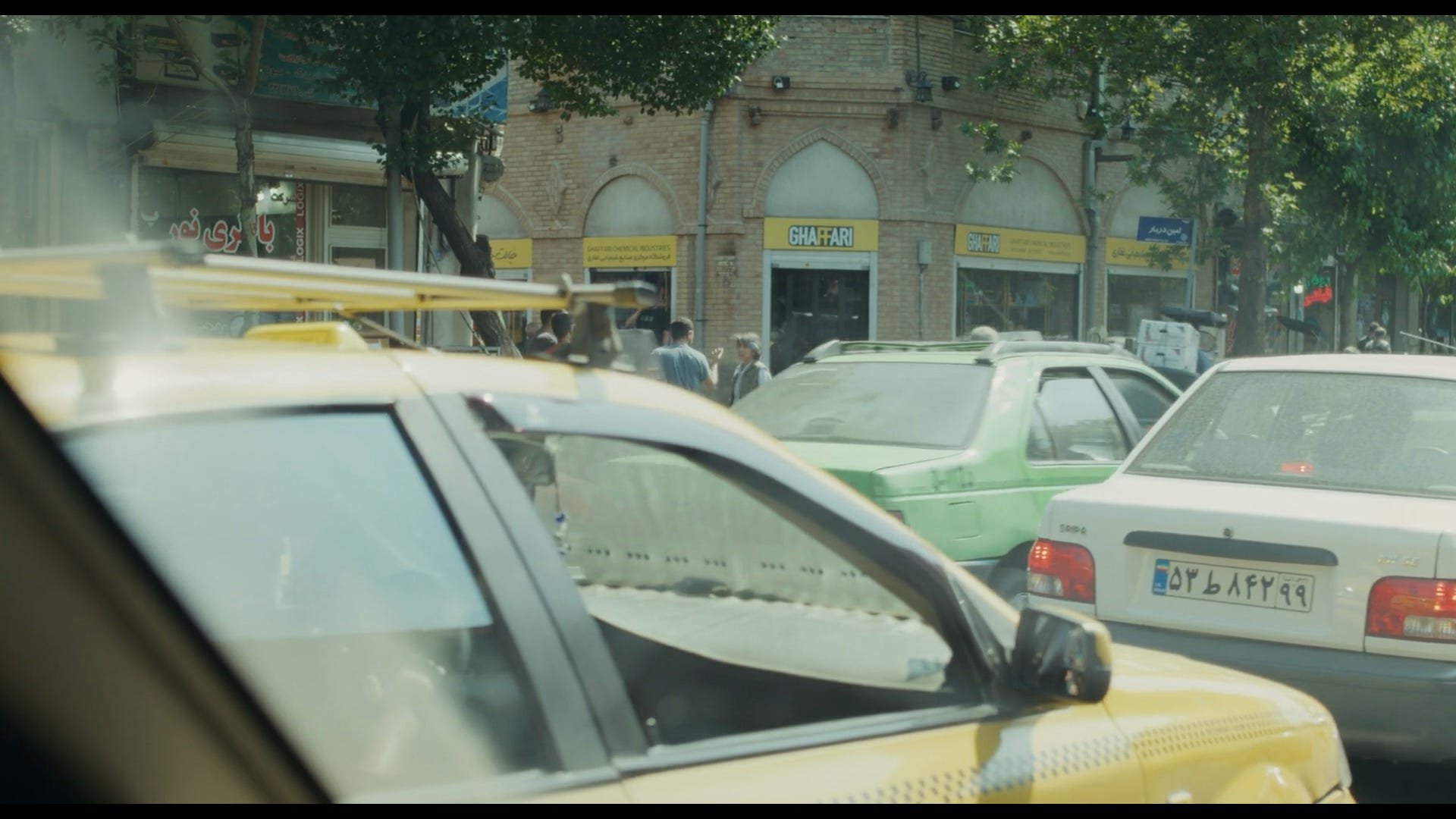
These are just two of the many signs throughout the film that it was shot in secret to avoid the detection of the Iranian government.
Much of It Was Just An Accident, the latest film from Iranian director Jafar Panahi which won the Palme d’Or last year a Cannes, and was nominated for 2 oscars this year, takes place in more remote locations. Areas where the filmmaker could stage lookouts to alert the crew if the police come by so they could hide the cameras. When shooting in more populated areas, the camera almost always stays concealed inside a car.
This approach is not a mere stylistic quirk or paranoia, but something that evolved in Panahi’s work out of necessity. By the time Panahi was making this movie, he had already sentence to prison time for filmmaking twice. As he was abroad this past year (leaving Iran for the first time since his travel ban was lifted) to promote the film, he received a third prison sentence, waiting for him upon his return to Iran. At the time I’m writing this, he’s returned to Iran, but have yet to receive news about his legal status there.
It’s surprising how little effect the undercover approach has on the overall film. If you weren’t paying close attention, you might not even notice. Yet the effortlessness with which Panahi now wields this clandestine style certainly didn’t arrive overnight.
For many directors a 6 year prison sentence and a 20 year ban from filmmaking for the alleged crime of “propaganda against the regime” might have been enough to push them to change careers or flee the country. But after the ban, Panahi, who had already been a director for 15 years at that point. . . just kept making movies.
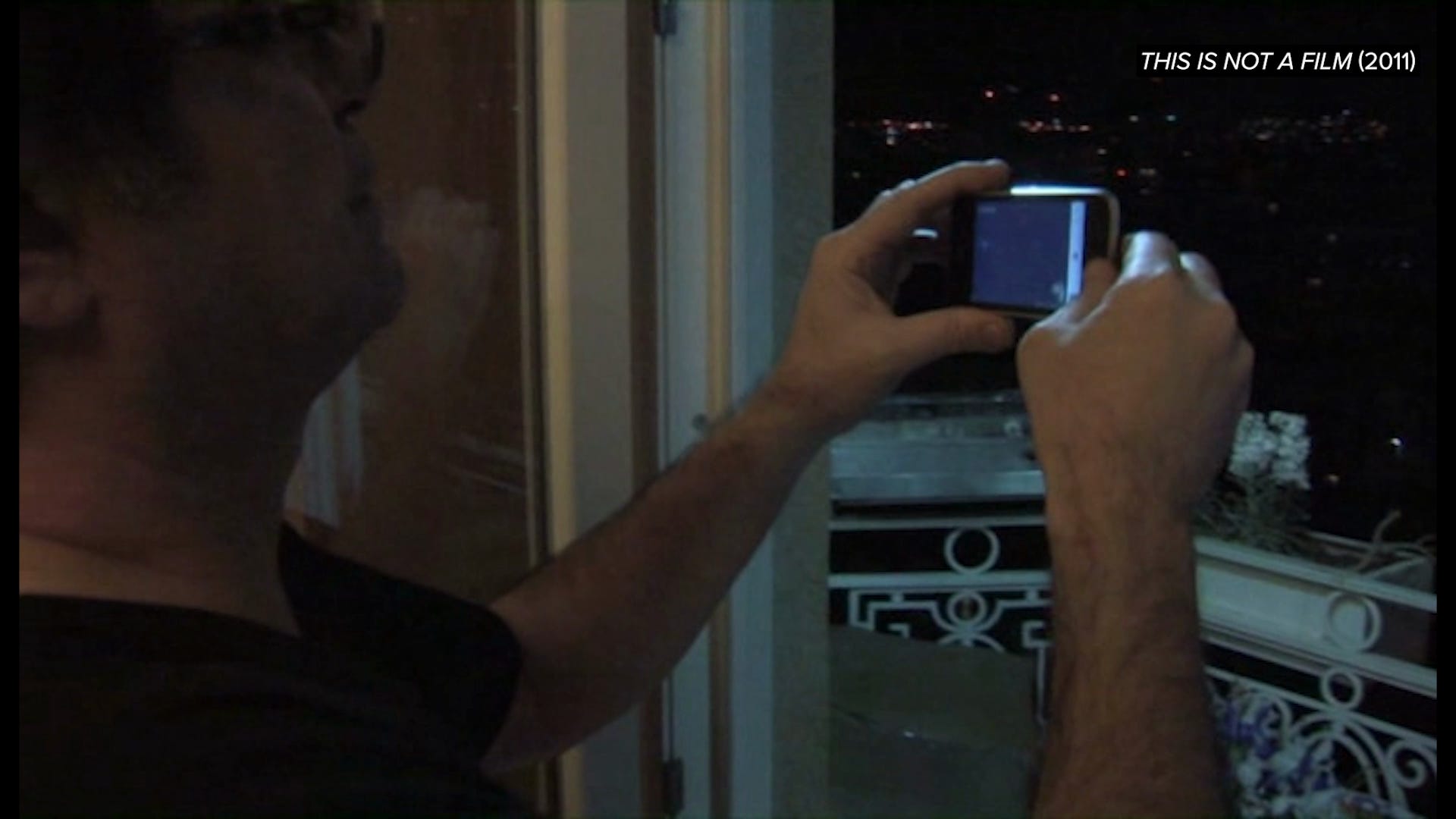
At first he tentatively tested the waters. This is Not a film was shot within the confines of Panahi’s apartment and was smuggled out of the country to the Cannes Film Festival (though not in a cake as the legend somehow came to be).
By Taxi—his 3rd made illegally—he had become bold enough to shoot in the semi-public setting of a car.
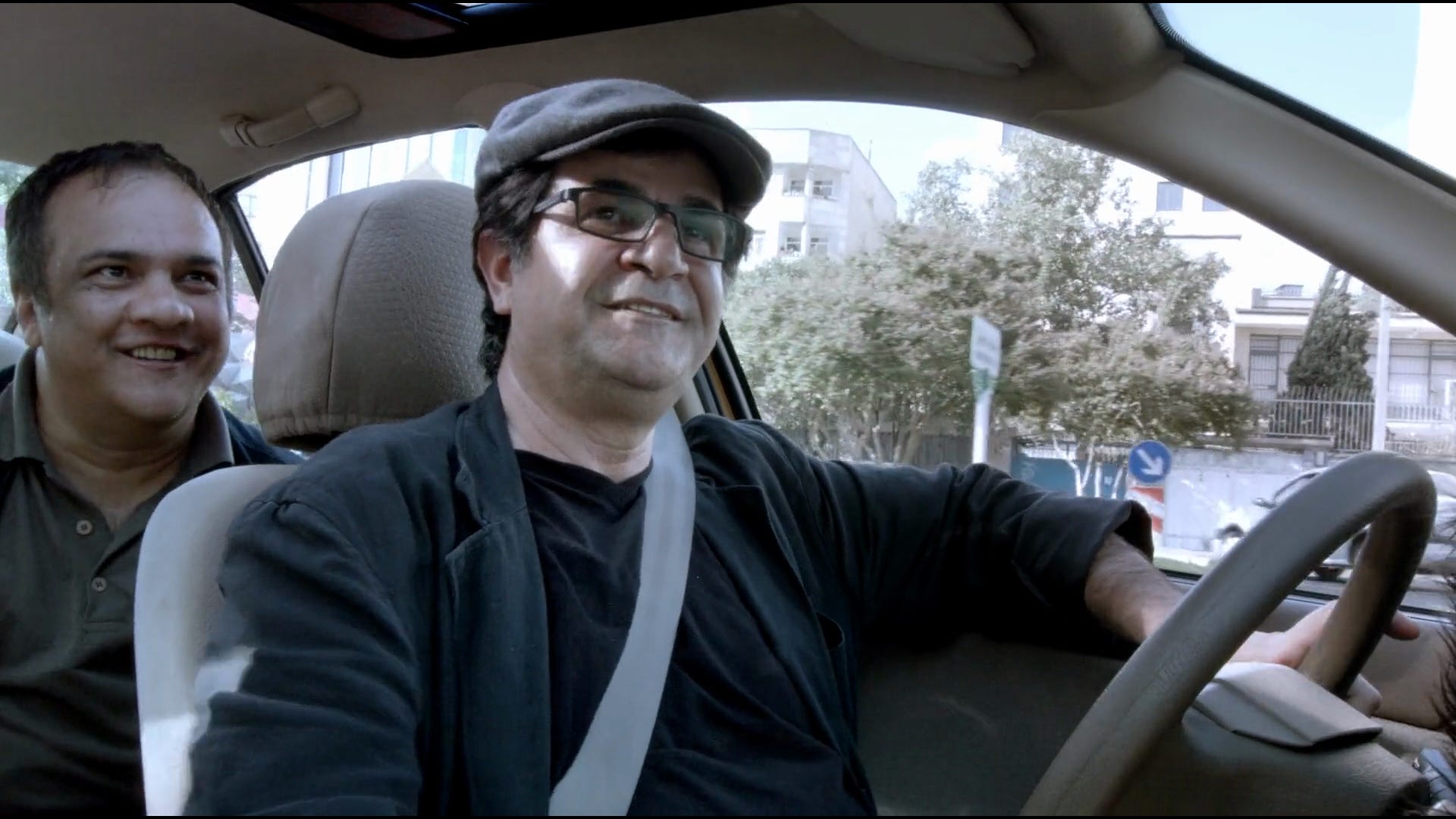
Taxi is a meta-fiction about himself as a taxi driver, making a movie while he pretends to be a taxi driver. The story is told through Panahi’s interactions with the different passengers he drives throughout the city. It’s cleverly constructed, and has a strong documentarian and anthropological impulse.
One scene from the film address explicitly the strict content guidelines placed on any film that screens legally in Iran, including a call to avoid violence, men and women interacting, and particularly relevant to Panahi’s work, something the censorship ministry calls “sordid realism.”
By the time Panahi shot No Bears in 2022, he had become bold enough to shoot outdoors in rural areas, skipping from one small village to another anytime the police came looking. This time telling a fictionalized version of how he goes about making his films in secret. It was after this film, that he would land in prison for the second time.
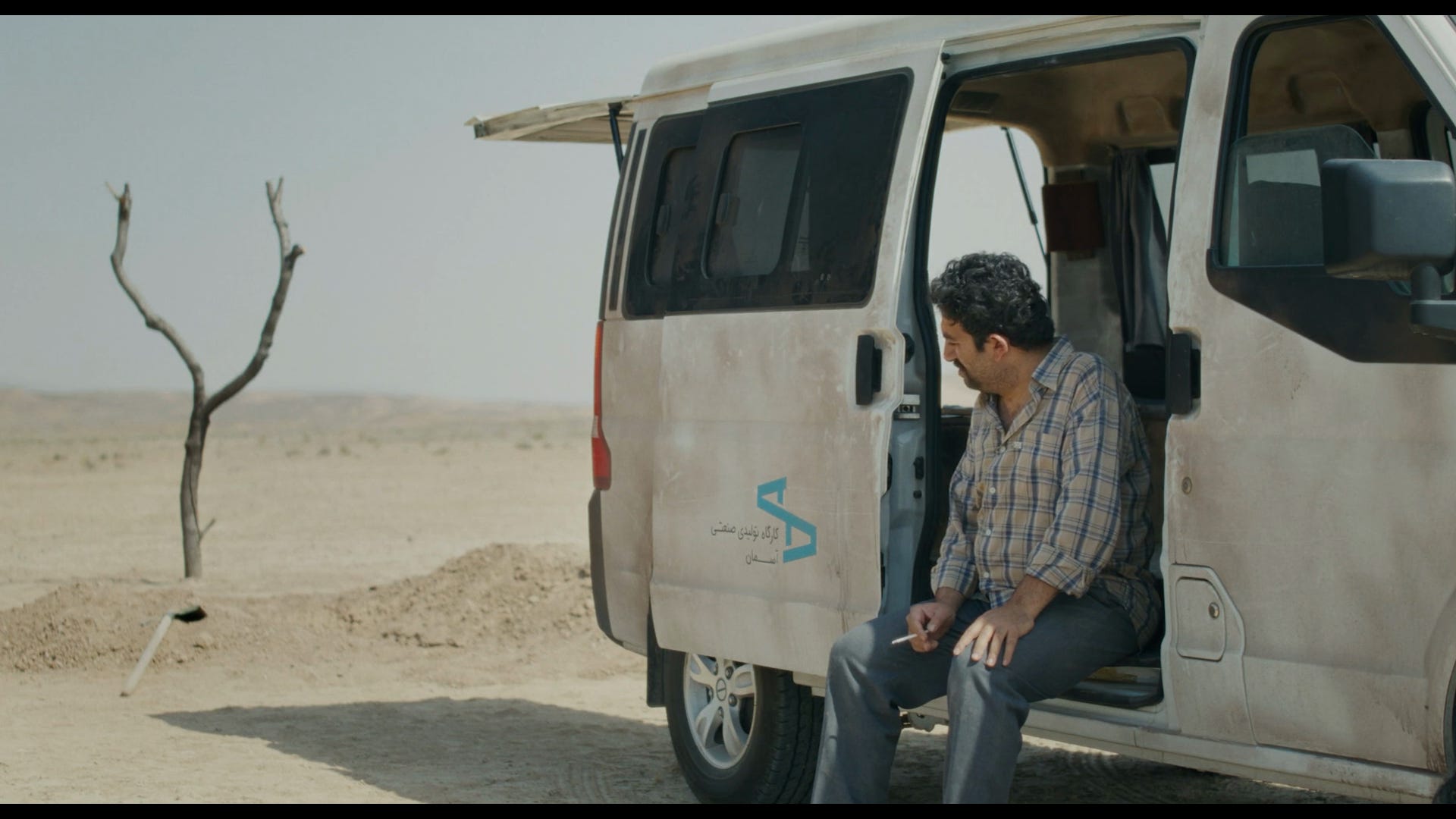
Vahid has kidnapped a man with a false leg. He suspects this captive is someone who tortured him in prison. But as the man protests Vahid starts to doubt. He wants revenge—but he does not want to harm an innocent man, so he starts tracking down other prisoners who were tormented by the same captor in order to verify his identity.
This is the setup for the rest of the film, which is full of suspense, a surprising amount of humor, and which ultimately poses the central question: how do you respond to people who have oppressed you, when, if ever, is violence or revenge justified?
This ethical question that runs through the heart of the film is not some hypothetical thought experiment for Panahi or the other Iranian’s on screen. Panahi based the movie on his experience in prison, and the stories that he heard there. It is not just the film’s real world political relevance that make it compelling however, it is the perspective that Panahi takes on these issues that I find most interesting. His perspective not just on politics and violence, but on Iran itself, and more importantly, on human beings.
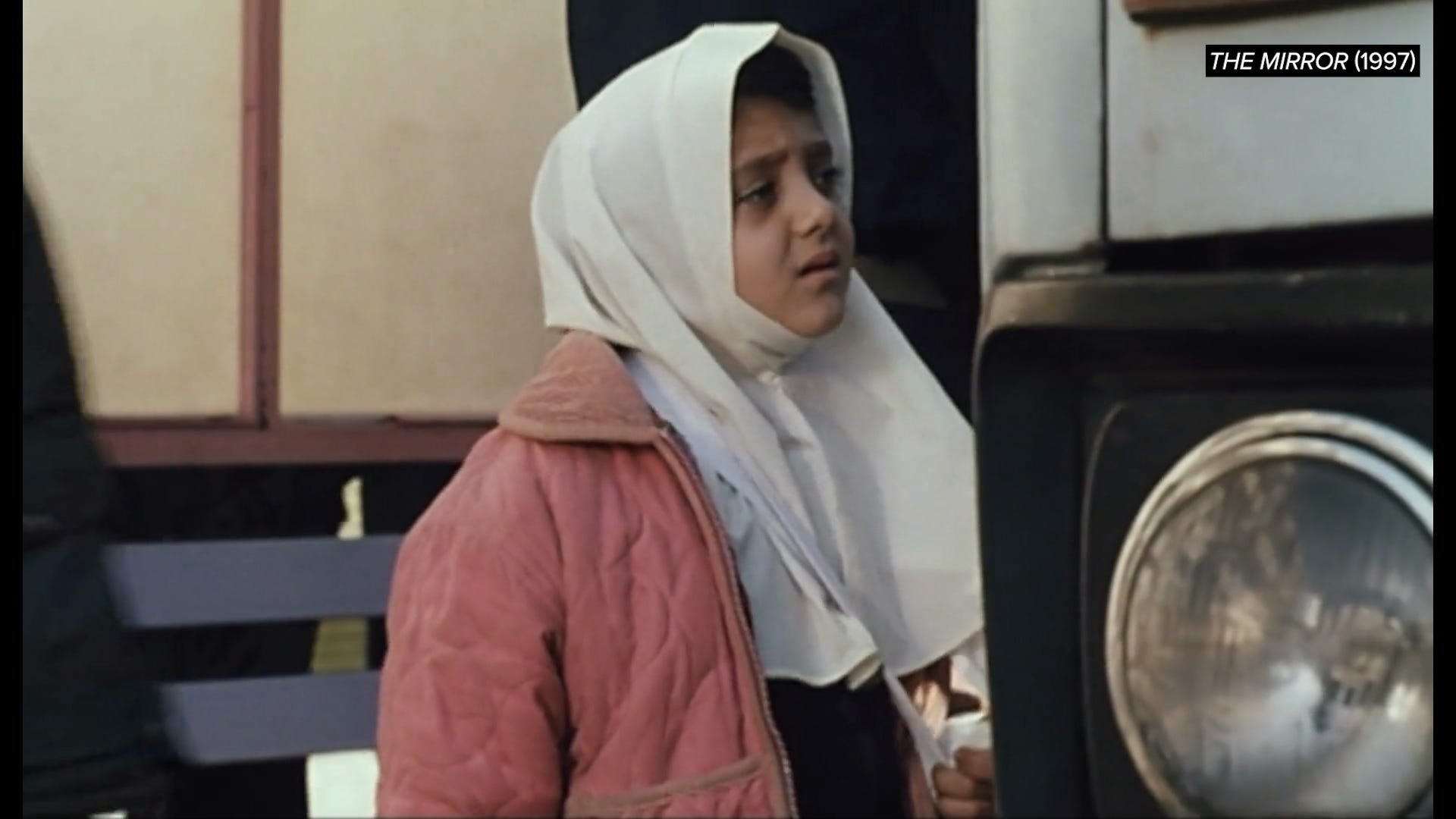
A young girl walks the streets of Tehran alone. She is trying to make her way home after her mother did not show up to pick her up from school. The Mirror, Panahi’s second film, would be the last movie he would make without any legal trouble.
Many hallmarks of what will come to define Panahi’s work are already present. Most notably the way he sees humanity and the world around him and his ability to capture that vision on film. It is an incredible movie, one I want more people to watch.
On the surface The Mirror is about this young girl and her journey home, we watch the film play out at her eye level. When she interacts with adults we rarely see their faces:
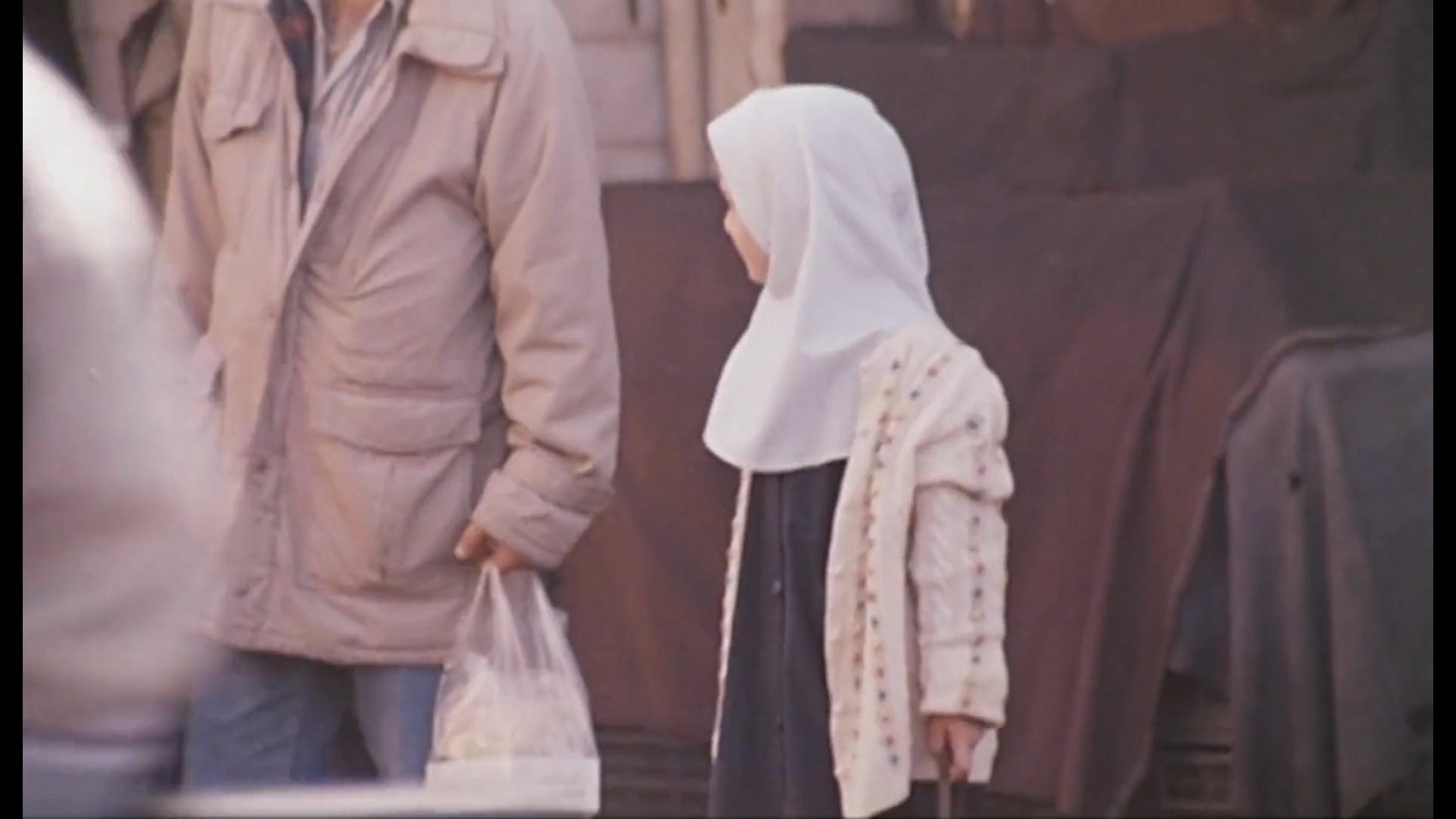
The camera does not observe her as an outsider from inside the world of the adults, it is placed within her world. The city around us takes on the kind of overwhelming force that a young child on her own would experience. Yet even this perspective unfolds with a great deal of nuance, we’re not merely given the most obvious story about the frightening reality of the city waiting to confront the child, we are shown her courage, independence, and even competence in navigating this space.
But there’s another side to the story that lends it even more depth, and that is the texture of the world that surrounds her. In the periphery of her journey we see the world of Tehran with a kind of documentary realism. Panahi positions his gaze so that we’re often overhearing (what feel like very real) conversations between adults, and through this we glimpse what appears as a very nuanced portrait of a place. Through Panahi’s eyes, as he gives us the perspective of a child, we clearly see the humanity of the city. The people in the film aren’t a homogenous mass, but individuals with different perspectives and ways of existing within the constraints their society has placed on them.
And what I find impressive about Panahi’s work is that he offers this kind of nuance to every character he portrays.
It’s hard to fully realize how bold the opening of It Was Just An Accident is the first time around. You simply meet a man driving his daughter and pregnant wife home late at nigh, they accidentally hit a dog, after they have some car trouble they stop to get help, this is where Vahid hears the sound of the leg.
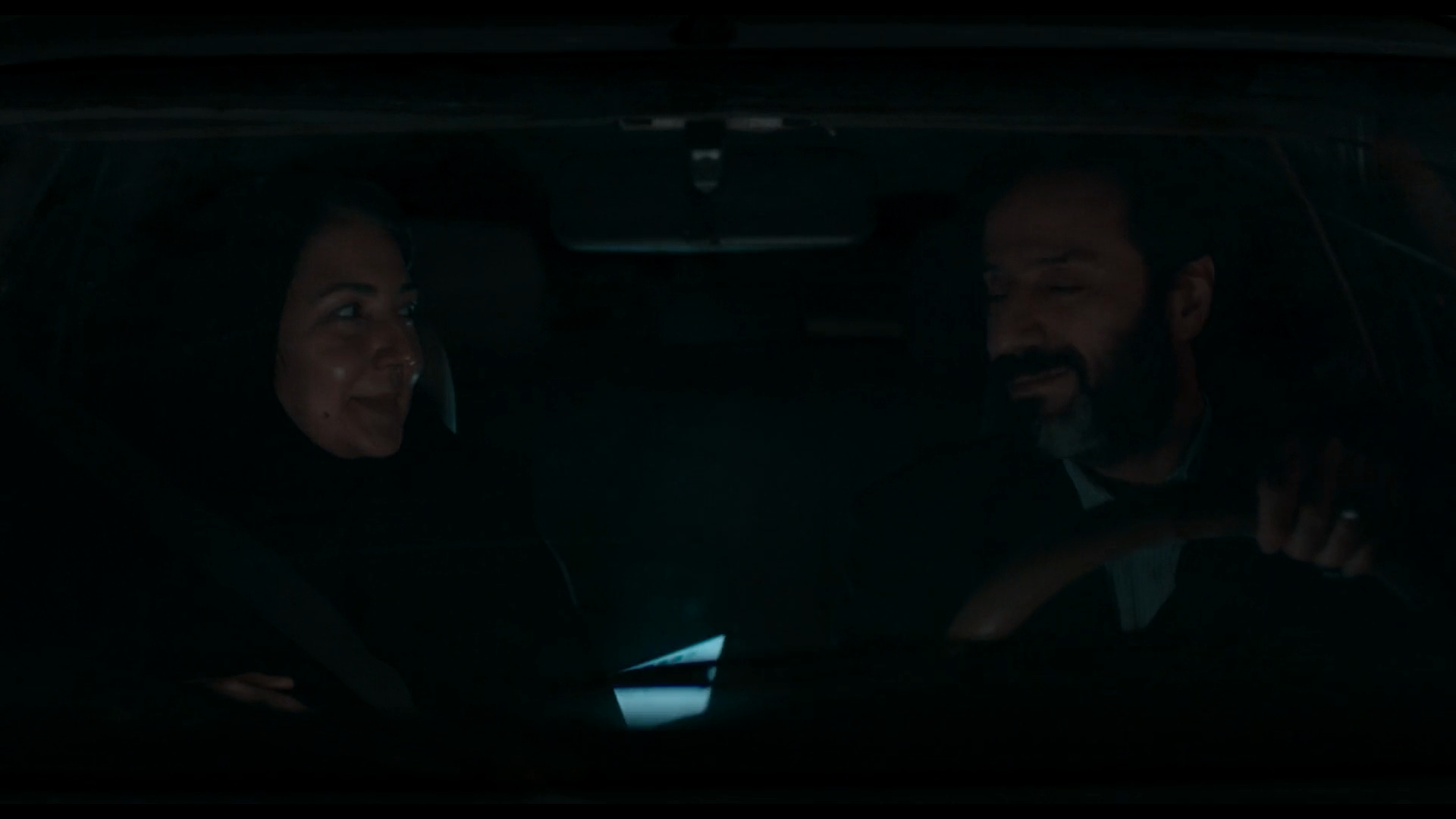
Based on the context available to a first time viewer, Vahid will likely seem like the villain of the film. The man he kidnaps doesn’t seem particularly threatening or evil – it’s only later we hear about how horrible of a person he might be.
I want to punctuate this: the movie Panahi makes fresh out of one of Iran’s most notorious prisons, opens by humanizing the captor.
Later—as the characters slowly become more convinced that they do actually have their tormentor tied up, after the stark reality of how horribly they were treated as prisoners comes out, and they debate what kind of punishment he deserves—it’s at the very moment when revenge starts to seem most justified that Panahi chooses to remind us again that this man has a daughter and a pregnant wife who may be harmed by his death.
I don’t read this as a shallow attempt to subvert our expectations or to build suspense. Panahi is simply asking us to do the thing his oppressor refuses to do, to see the humanity in everyone, to ask if they really deserve violence. They know that if they harm this guy, they’ll risk harming his innocent daughter. The question: even if we’re attempting to right wrongs that were done to us: is whether it is justifiable to knowingly allow the innocent to be harmed?
To treat the child as collateral damage.
I was in the middle of editing the video version of this essay when The United States and Israel began bombing Iran. One of the bombs that fell killed Ali Khamenei, the Supreme Leader who presided over the recent massacre of tens of thousands of protestors. Another bomb, which investigations seem to indicate was launched by the US, fell on an girls school, killing more than 100 civilians, many of them children.
It is impossible to disconnect the meaning and significance of It Was Just An Accident from the political context of the protests, massacre, and continuing war. I’m not a political analyst, or expert on foreign policy, so I don’t want to spend to much time here trying to relay that context to you. But there are times when looking at the discussions of the war online and reading through comments on social media posts feels a lot like watching the arguments that play out in the back of Vahid’s van.
The question of justice and non-violence is already an incredibly difficult and fraught subject, and in It Was Just an Accident, Panahi tackles these subjects in what I think is an incredibly daring way, by doing what he’s always done: showing things in their uncomfortable complexity, without reducing reality to the binary of political propaganda. He’s trying to see the humanity of each person in the conflict.
This of course, is an easy way to upset people, because while trying to see the humanity in each of these perspectives he cannot force the viewer into siding with a particular view. For those who believe their view is the truth that must be fought for, that can feel like a betrayal of everything they believe in.
And in conflicts like this it is impossible to ignore the role of propaganda. Political violence is often driven by and supported by narratives that portray the other side purely as a threatening enemy, and their own side purely as a force fighting for good. I have seen expressed, under every possible perspective on this conflict, (including about this film itself) the accusation of the media in question being propaganda for one side or another.
As I was grappling with how this film fits into the current context, it had me wondering, is it even possible to make art that touches on these subjects that isn’t propaganda?
How does an artist or a film director navigate these waters? Can you engage with the nuance and complexity of differing views on these subjects, without resorting to a watered-down both-sidesism that uses neutrality as an escape?
It might surprise you to learn that Jafar Panahi does not think of himself as a “political filmmaker” telling Hollywood Reporter he calls himself a “social director.” I don’t think this is the kind of meek attempt to claim neutrality we’ve seen recently from some artists who naively hope their work can be “apolitical” when any perspective ultimately has political implications. Instead this has to do with the perspective through which Panahi approaches the political in his work, which I believe is core of how he avoids creating propaganda:
“In my definition, a political filmmaker is somebody who belongs to a party and who defends a specific ideology, and so they make a film that defends their ideology, in which the good people are the people who observe and respect this ideology, and the bad people are those who are against them.”
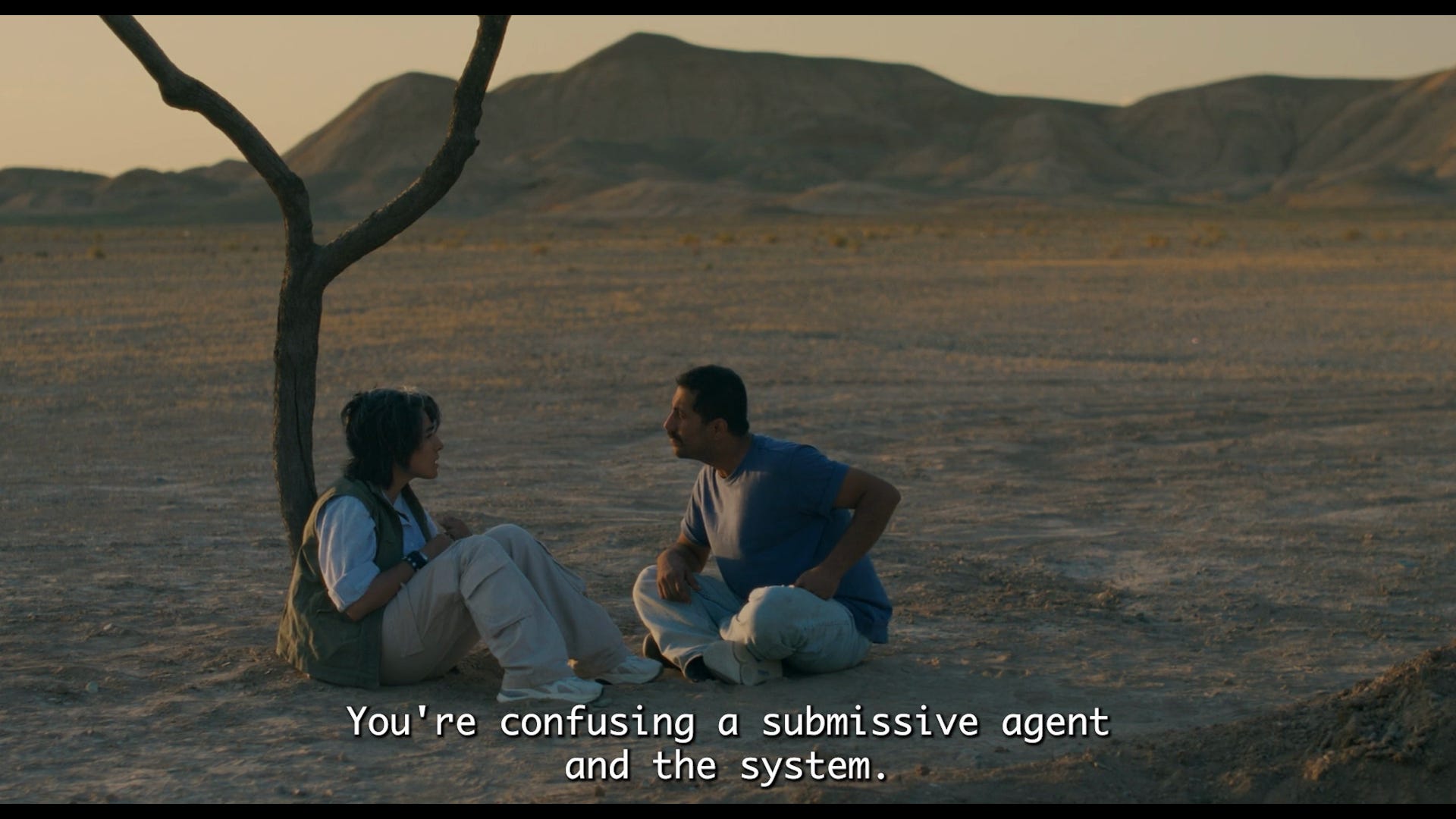
If Panahi condemns anything wholesale in his work it is not a specific kind of person, but rather the ways of thinking that motivate the individuals’ harmful views and actions. This is part of the tension that is held in Vahid and Shiva’s skepticism of their own desire for violent revenge. The idea that is ultimately at the heart of a commitment to non-violence.
They know they suffered injustice, and they have an understandable desire to seek justice by taking revenge on the man they believe was their captor, but they also know it was their captor’s system of thinking—the political narratives he bought into which turned them into pawns in a religious and political struggle—that allowed him to strip them of their humanity, and to perpetrate violence against them.
They want to be sure they do not fall prey to their own version of this violent, dehumanizing logic.
One of the common ways propaganda works is by crafting narratives that simplify complexity into reductive binaries—portraying one side as so irredeemably evil that violent force is the only option, and portraying the other side as justified in whatever actions they take, because they are inherently on the side of good. The logic of propaganda is dehumanizing, flattening the real people involved, civilians and children included, into nameless extras, NPCs, in the background of an oversimplified story about nations and geopolitics.
Panahi’s work defies this by working around those narratives. Not because those narratives are irrelevant (they have significant real-world repercussions) but in order to offer us an opportunity to see the people in the conflict as people—as human beings just like ourselves.
Through these characters, he even wonders if we should offer this humanizing lens to our worst enemies. He doesn’t suggest hey should not be held accountable for their wrongs, but how can we ever expect our enemies to see our humanity, if we refuse to recognize theirs?
This is the question Vahid and Shiva are left struggling with. And I won’t spoil the ending because I want you to watch this movie if you haven’t, but I think it’s important to note that Panahi doesn’t ask these questions lightly. He does not consider non-violence naively. He also humanizes the perspective of those who have experienced such much injustice, that non-violence feels impossible.
A non-violent path hopes we can find freedom by defying the logic of force. It hopes that humanizing tools like compassion, understanding, and the revelation of truth can undermine the dehumanizing logic of violent oppression. If there is any hope in this path, compassionate art is one of it’s most powerful tools available. Authoritarian regimes implicitly understand this, which is why they try so hard to censor art. Which is why they see a camera as a threat.
Panahi doesn’t just use It Was Just an Accident to ask these difficult ethical questions. The movie is itself a question waiting to be answered. Panahi has offered it as his own form of non-violent dissent, and as he returns to Iran with a third prison sentence awaiting him, he awaits an answer to his own question about what the consequences of this kind of dissent will be.
Jafar Panahi's films are high on my to-watch list (I'd like to watch THIS IS NOT A FILM as soon as I have the mental energy to give it my full attention), and this piece might just push me to get started with them.
The point you make about Panahi's rejection of dehumanisation and propaganda is especially interesting considering how, when I think about anti-authoritarian artists, my mind goes to people like Bertolt Brecht, who wrote bluntly ideological plays populated by non-realistic characters that he wanted viewers to scrutinise, not empathise with. It's easy to see how Brecht's works challenge authoritarianism and upend its simplistic, flattened narratives, but your discussion of Panahi's rejection of "political filmmaking" paints a contrasting yet resonant approach to those same problems.
It Was Just An Accident: best film of 2025.