
Art Is Always Experienced in A Narrative Frame
Contra Scott Alexander on Taste.

A group of bloggers are in a circle at the party arguing about art, and there’s no way I’m not wandering over there to join in. This is a response to Scott Alexander’s recent post on taste. Your experience of this post will of course be enhanced by reading his, but I’ve tried to construct it such that it should hold water on its own.
I enjoy this discussion but I think it’s important to hold it lightly. Despite how much ink has been spilt theorizing about art, the beautiful thing is that this is one area where the theory matters very little. Art is ultimately not something we participate in after rationally deciding we should, it’s an emergent phenomenon in human behavior that many of us find it inherently meaningful. How we talk about this behavior is always secondary to the practice and appreciation of the thing itself, which is incredibly individual.
Art is Not Raw Sensory Input
Every issue that Scott raises about art and taste feels grounded in a fundamental perspective. This perspective is best illustrated by his opening “Parable of the Steakhouse” where he describes feeling disappointed as a young lad to learn that food critics do not rigorously blind taste test the food. Shouldn’t food critics strive for total objectivity? Shouldn’t your opinion as a critic be based entirely on the raw sensory input of the taste of the food itself, while removing cumbersome attributes of the dining experience like the restaurant’s ambiance, which could bias your opinion of the food?
Scott reveals towards the end of this section:
“I’ve since made my peace with real-world restaurant criticism. I suppose it’s true that real people go to a restaurant and soak in the ambience, and that’s part of what makes restaurants fun. I suppose it’s true that making a visually appealing dish succeeds at delighting the senses no less than making something delicious.”
I’d posit that Scott’s perspective throughout his essay, despite what he might say, seem to reflect that he has not actually made peace with this.1 His view as expressed seems to be that the purest experience of art is one’s apprehension of the raw sensory input associated with the work, and that we should be somehow suspicious of the elements of the experience that surround the work of art when we attempt to evaluate its worth.
I’ll grant that wanting to strive for the objective evaluation of art on the basis of certain qualitative values (like taste in food, or technique in painting) is appealing. We all want to know if the $200 bottle of wine actually tastes better than the $20 bottle, or if people are just being fooled by labels. Thankfully, we’ve studied this. Plassmann et al in “Marketing actions can modulate neural representations of experienced pleasantness” shows that the “experienced pleasantness” of the wine the subjects tasted was impacted by price. Importantly—it’s not just the participants “reported enjoyment” that was impacted by price. The researchers performed brain scans which reveal that the subject’s measurable experience of enjoyment within their brain itself is actually modulated by price. It’s not like the participants are just saying they prefer the more expensive wine for social status, they’re actually experiencing more enjoyment from the more expensive wine—when they know it’s more expensive.
We intuitively understand that this applies very broadly to many aesthetic experiences in life. Not just because of price, but due to countless aspects of the context that surrounds the art itself. Our perception of Michelangelo’s David does not just emerge from the work’s qualities as an artistic object in isolation, it is also from the historical and physical context in which we view the piece—all of which constitute a narrative frame.
Now, I suspect Scott might interpret this Plassmann et al’s findings as proof that his view is correct. The impact of the price of wine on our enjoyment is exactly why we should rigorously isolate the sensory experience of the work from its context. But I’m arguing this is exactly why a critic shouldn’t try to evaluate a work in isolation. Doing so is nice in theory, but the problem with this approach is that it is hypothetical. We do not look at a painting or sit down to eat a meal in a hermetically sealed research environment. If the critic evaluates the art within a double-blind, randomized, controlled trial, they aren’t actually evaluating the experience that the public will have. If context like price literally alters our perception of the experience itself a useful critic must work within this context.
Central to my argument throughout this essay is that all art is experienced within a narrative frame, which inherently effects our perception of the art. Trying to remove the frame does not get us closer to a more “pure” or “objective” experience of the art. Art consists of objects and symbols that elicit a response, but that response in deeply, inherently tied to the context in which we experience it. Even the blindfolded food critic who doesn’t know where the food is coming from would not be representing an “objective” experience of the food free from context. They’d still bring with them the narrative frame of their personal preferences, all the food they’ve ever eaten before, how they’re feeling that day, the way the progression of the different foods effects their palate, etc. With art, the narrative frame that surrounds the work consists not only of the environment in which it’s displayed, but also its position within art history, whether its in our native language, our personal life experiences, every other work of art we’ve ever seen, and much more.
I can understand why we’re hesitant to accept the inevitable influence of the frame. None of us want to think that our aesthetic experience is influenced by something as profane as price. But there is a sacred corollary. What about the museum, cathedral, or cinema? The religious icon—situated within the cathedral it was commission to exist within—will hold a different kind of meaning than the icon or the cathedral would on their own. Does this mean the experience of the icon is delegitimized in some way, because its presentation within the space is part of why it is regarded it with a certain eye?
Sure we might get more pleasure out of a bottle of wine with an expensive price tag. But we also get more pleasure from a meal served to us by someone we love, after a day of hard work when we’re starving. Watching Interstellar in 70mm IMAX is not the same experience as watching it on a airplane. Why would we deny the humanity of the frame as part of our experience of art?
It’s easy to turn our nose up when we perceive that a profane narrative frame (the price) makes something more enjoyable, or if we perceive that a “sacred” narrative frame (the museum) is being used to give something profane the appearance of profundity (Duchamp’s Fountain). But why do we think the work has to speak for itself in isolation? Nothing we ever experience actually exists in isolation.
In the face of this we might be tempted to throw up our hands in defeat, or to dogmatically insist (as I believe Scott to be doing) that we should seek to ignore the frame. But I think the appropriate response to this is to acknowledge and integrate the existence of the frame into our understanding of the art itself and how it effects us. Being able to do so is one of the attributes that contributes to what we often refer to as taste.
Ultimately trying to isolate a work from its context is a nice idea, and attempting to do some might provide one approach we can use to learn more about how art works. But it’s just that. An idea. An approach. If you eradicate the frame surrounding the work, that clinical sterility itself becomes the frame. It doesn’t represent a more “pure” experience of the art itself. Scott reluctantly admits that context does effect experience, but treats this context as something dubious that we should try to ignore, rather than an inseparable part of the experience itself.2
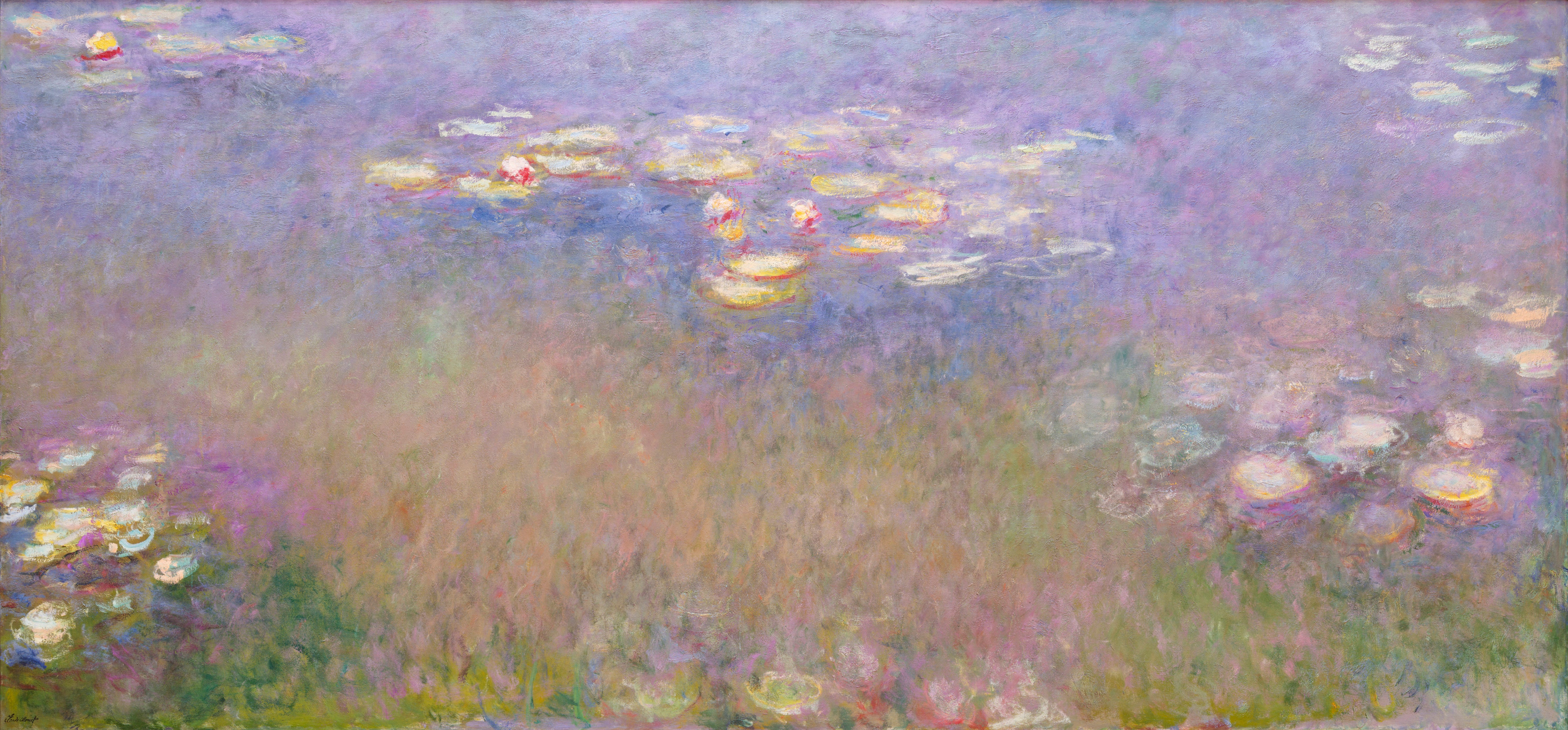
Nobody has made Water Lilies since and Yes I do like art.
Creating hypothetical situations that we never or rarely find in the real world will continue to be one of the pitfalls in Scott’s approach to this subject.
In the section, “Okay, But Do You Like Art?” he is attempting to challenge our impulse to value art that is innovative or novel in the context of art history. Culturally we usually place greater value on art that presents something new, rather than on art that re-hashes the same techniques, styles, and movements, and narrative structures we’ve seen before. I suspect, because valuing art on this basis involves considering the work’s frame as we judge its quality, Scott find this objectionable. He says: “If you genuinely believe in the power of art to awe and transform, it’s strange to also care about its novelty and provenance.”
Again it’s a nice idea. One based in an idea of purity. From his perspective if you’re moved by a work of art, that experience is most authentic if it’s produced entirely by the aesthetic qualities of the work itself, isolated from any outside influence, like knowing who made it.
He attempts to bolster this claim with a few thought experiments. One involves an audience seeing a renaissance sculpture they’re amazed by, and then discovering that it was actually mass produced “c. 1995 by a Boomer from Ohio.” Another hypothetical involves discovering a long-lost volume of poetry from G.K. Chesterton (Scott’s favorite poet). In this scenario he’s amazed and delighted to read the new volume, and then discovers that it wasn’t actually written by Chesterton. He poses the question of whether or not we should be disappointed in this scenario, or value the new volume any less, upon discovering it was not Chesterton’s. And the third, possibly real scenario is someone who told Scott they don’t value contemporary impressionist painting as much as classical impressionism because “it doesn’t participate in the original discussions around Impressionism.”
In each of these scenarios Scott asserts that the frame of “novelty and provenance” ideally shouldn’t impact our experience of the art if “we genuinely believe in the power of art to awe and transform.” As you might suspect I have a few issues with this.
First (see above) you cannot remove the experience of the art from the frame you experience it within. I’m not going to rehash the entire argument, but again while it’s theoretically possible, it is almost never the way a person will experience art in the real world. Most of the time you aren’t finding a Van Gogh unlabelled in an antique mall. Usually when you’re experiencing art you aren’t being tricked about its historical origin and context. And since we’re inevitably aware of these things to some extent, they’re part of the narrative frame and are better off considered as part of the experience.
Second, and more importantly: these hypotheticals rarely happen because often the historically significant stuff is actually uniquely good in a way that’s never quite replicated! There are hundred of painters still working in impressionism—but none that I have ever seen actually come close to achieving something like the peak of Monet’s Water Lilies series. Boomers in Ohio are not creating sculpture that rivals renaissance masterpieces. Nobody is writing in Chesterton’s style as well as Chesterton. I’m sure we could find a few stray examples that show otherwise, but unless you could produce a bounty of such examples, I’m going to claim they’re the exception that prove the rule, and the fact that this section of Scott’s essay is built mostly on hypothetical scenarios significantly weakens his arguement.
Another part of why these things rarely happen is because artist like Monet, Chesterton, and Michelangelo are generational masters of their craft who had, not just incredible skill, but a specific environment and life experience that formed their work. We don’t just experience art within a narrative frame, it’s also produced within an narrative frame. I think it’s (forgive me Scott) a little naïve to believe that some of the greatest works ever created are so easily challengex by artists working completely outside the environment and context the original artists was working in. Part of what makes Chesterton’s poetry what it is, are the 50,000 impossibly tiny variables in his life that informed his work. His work and style isn’t something independent of the context he was creating within, that can so easily be copied. The people who have the rare talent need to create such works of imitation, often would prefer to refine their own unique voice and style, rather than imitate someone else’s.
So we can imagine hypothetical scenarios in which some contemporary artist is magically able create new works completely indistinguishable from the work of a historical genius, and we can then berate people for not treating it with equal reverence. But I don’t see any proof that this is actually happening in a widespread manner throughout culture.
I feel like I have the check-mate here, because—even if this was happening—I ask again why is provenance and novelty so dubious? Isn’t a 700 year old work that represents the first time a certain technique was ever mastered more inherently interesting a than some copycat in Ohio?
Scott’s asserting that the “power of art to awe and transform” should most authentically be found in the raw unmediated experience of the work devoid of context, but taking the story of the work into account is simply what humans do. Whether we like it or not, we seem to care. We care about the narratives that surround the art for the same reasons we care about the narrative in the art! We are always seeing everything through and as a part of a narrative. I do have an appreciation in the power of art to awe and transform. I believe if I heard Claire De Lune for the first time , or stood in front of one of Monet’s grand Waterlilies without context I would still be moved and entranced. But I also have a respect for the power of narrative to awe and transform—and that extends to the narratives that frame the art we experience. Ignoring the narrative frame is like serving a pasta dish on a table without a plate.

Are We Talking About Critics or Regular People?
Another thing I must address. Scott’s target for this discussion seems ill-defined. When he talks about whether or not “we” take novelty and provenance into consideration is he challenge the broad cultural evaluation of art among “lay people” or is he specifically challenging the cultural institutions (academia and criticism) that work to formalize the narratives and history surrounding art? The difference is important.
Let’s go back to the example of contemporary impressionist painting. Scott speaks as if contemporary impressionism is somehow written off across the board (as illustrated by the friend he asked). And to a certain extent—by most of academia, by most museums, and I’m sure by some aesthetes and art lovers—it is. But these are people who explicitly care more about art history. It is potentially even their institution’s job (among other things) to catalogue, document and present art history to the public. I’m not saying they do this perfectly, but it makes sense for them to care about novelty and provenance, and I don’t think we’d want them to adopt a radically different value system. The Met has limited space. Should it displace a 300 year old sculpture to make way for the work of some guy in Ohio who’s copy what’s already been done?
Critics are performing a slightly different task, but again a significant part of their job consists of taking context into consideration, and letting you know if this experience offers something new and fresh. If the movie is one I’ve already seen 100 times—I’m sure going to take that into consideration in my review. That doesn’t change the fact that if it’s the first movie someone has ever seen they’ll probably enjoy it 100 times more than me. But as a critic I can’t go around awarding every movie an 11/10 score because I’m imagining how the audience that watched L’Arrivée d’un train en gare de La Ciotat would perceived it. I wouldn’t be a very helpful critic to my readers doing that. It’s true that sometimes critics that have watched 10,000 movies have gone off the deep end and are so jaded that their critical assessment isn’t that helpful for someone who watches, say, a dozen movies a year. But that critic still has a unique perspective to report on, and there are plenty of critics who are more aligned with populist appeal you can read instead.
So let’s say instead that Scott’s bone is not with the critics and institutions that evaluate art but instead with the general cultural appreciation of art. And here again, I disagree with his view. Sure there are some people who write off all contemporary impressionism because “it doesn’t participate in the conversation” but contemporary impressionism is actually alive and well and there are plenty of people who appreciate it.
I live in Asheville, NC, which has an unusually high density of art galleries for a city this size. I love walking through these galleries, and believe me when I tell you they are absolutely packed full of contemporary impressionist art. Plenty of rich New Yorkers come to these galleries and drop $10,000 on a massive canvas of brush strokes that look like a cloud. I think some of these paintings are beautiful, and some of them are kitsch, but none of them hold the same appeal as a Renoir. Is that just historical context talking or was Renoir just a master of the craft in a way that most contemporary impressionists are not? I’d argue that latter. Yet there’s still enough appreciation for contemporary impressionism that some artists can make a living doing it, and people hang it on their walls. At least a significant portion of those people like the art simply because they think it’s beautiful. Are we demanding that every artistic movement and subculture hold the same relevance in institutions for all time? I think this would be unproductive.
In Which I Risk Being Perceived as a Snob by Offering a Mild Defense of “Modern Art” or No, Critics are Mostly Not Trying to Pull a Fast One on You, Some of Us Actually Enjoy This Stuff, Sorry I Don’t Know What Else to Tell You.
I’ll end by address Scott’s last two sections on Modern Art.
Here Scott puts forward a two-fold conspiracy that I’ve often seen repeated elsewhere. The idea that modern art has entered a postmodern death spiral consisting of one-up-man-ship in reaching for greater and greater levels of novelty and deconstruction of our expectations about what art can and should be. This is exemplified by work like Duchamp’s Fountain (a sideways urinal), or works like Comedian, by Maurizio Cattelan, which consist of a banana taped to a wall in a gallery. Showing this stuff in a gallery, according to Scott and other modern-art-detractors is tantamount to a Michelin Star restaurant serving “lukewarm slop.” Furthermore, the critics who comment sincerely on these works and do anything other than cry in despair at the very existence of art like this, are complicit in this race to the bottom, gleefully waving their middle fingers at beauty and artistic craft as they fade into cultural obscurity.
I where this view is coming from. Like all conspiracy theories at has some basis in a kernel of truth. From the outside a banana taped to the wall is just proof that the whole thing is a big joke. That the wealthy money-laundering elites are trying to rob the world of everything good and beautiful while critics try to tell you that you would get it if you really understood the work as it exists within the dialectic of art history.
I have the unfortunate position here of playing the part of that critic, and I want to try to (borrowing a term from Scott’s universe) “steelman” the argument for this so called Modern Art.3 I’ll begin with a few concessions. Yes certain art institutions and sections of art culture have been captured by snobbish elite gatekeepers. Yes some critics reinforce this dynamic while look down their noses at the common man who “just doesn’t get it.” But the fact that some people are snobs about Michelin star restaurants and refuse to think anything else is worth eating, should not be treated as proof that all Michelin star restaurants have lost their way and now serve slop. If we write off “modern art” entirely we lose out on an opportunity to appreciate some really cool, playful, punk art. None of this is to say you have to appreciate this stuff or say it’s good, I’m just inviting the detractors to consider it from a new perspective.
So what is that perspective?
First I would say that many of the postmodern artists agree with you! What is the urinal if not a critique of the elites who will happily slurp down and pay money for whatever is sold to them by institutions as fine art? What is the banana taped to the wall if not a jab at contemporary art curation? What those outside the art-world often see as a symptom of the problem, are frequently artists expressing a similar critique and contempt from the inside.
I can see why this doesn’t appeal to a lot of people. Are these “critiques” really accomplishing anything? Probably not. And if you’re not “in on the conversation” a banana taped to a wall just looks stupid. But I’d point out that it’s one thing to look at these pieces from a remove, and it’s another to experienced them within the narrative frame they were intended to be seen within. How do you know that after spending a day wandering a Modern Art gallery you wouldn’t come across the banana and laugh because it suddenly communicated what you had been feeling about this space and the work within it? I’m not saying the banana is the greatest work ever made, or somehow on the same level as a Monet. But I am asking detractors to be curious about what the artist was actually trying to say with the work.
Second, I would encourage us to expand our vision of what art can be beyond just the production of beauty using highly specialized craft. Art is also a form of play. It can provide just as much value to the viewer as a means of making a joke, being silly, trying to scare someone, or trying to critique the very narrative frame it exists within. If you prefer that all the art you see be beautiful and focus on that end while forsaking all others–that’s fine! Go for it! But it seems unfortunate to me to limit art only to that end.
Finally I would say that the accusations of “sharks in formaldehyde” are overblown. Periodically some example of a particularly absurd piece of postmodern art gets taken out of context, goes viral, and gets used as token proof of how the entire contemporary art scene has gone off the rails, when in reality these works are often a very small subset of the many different contemporary art movements that have been happening for the last 50 years. You might might hate certain forms of modern or postmodern art, but is there any that you do find appealing? Have you gone to the galleries or museums and looked? Or are we just casting judgement based on edge-cases that go viral? If you have looked and you don’t like any of it, then I’d say that’s fine as well! It’s probably not for you, and there are many museums full to the brim of all kinds of other art, as well as galleries and markets that appeal to more classical styles. I like some works of modern and postmodern art and dislike other. I also like some classical works of art and dislike others.
Most people who are disgusted by the banana on the wall aren’t wandering the halls of MOMA for hours. They’re seeing one work in isolation. I think however that it’s possible many of the people who hate the banana might find something else in a similar gallery that they like. And if they don’t, then maybe this gallery, museum, or art movement is simply not for them!
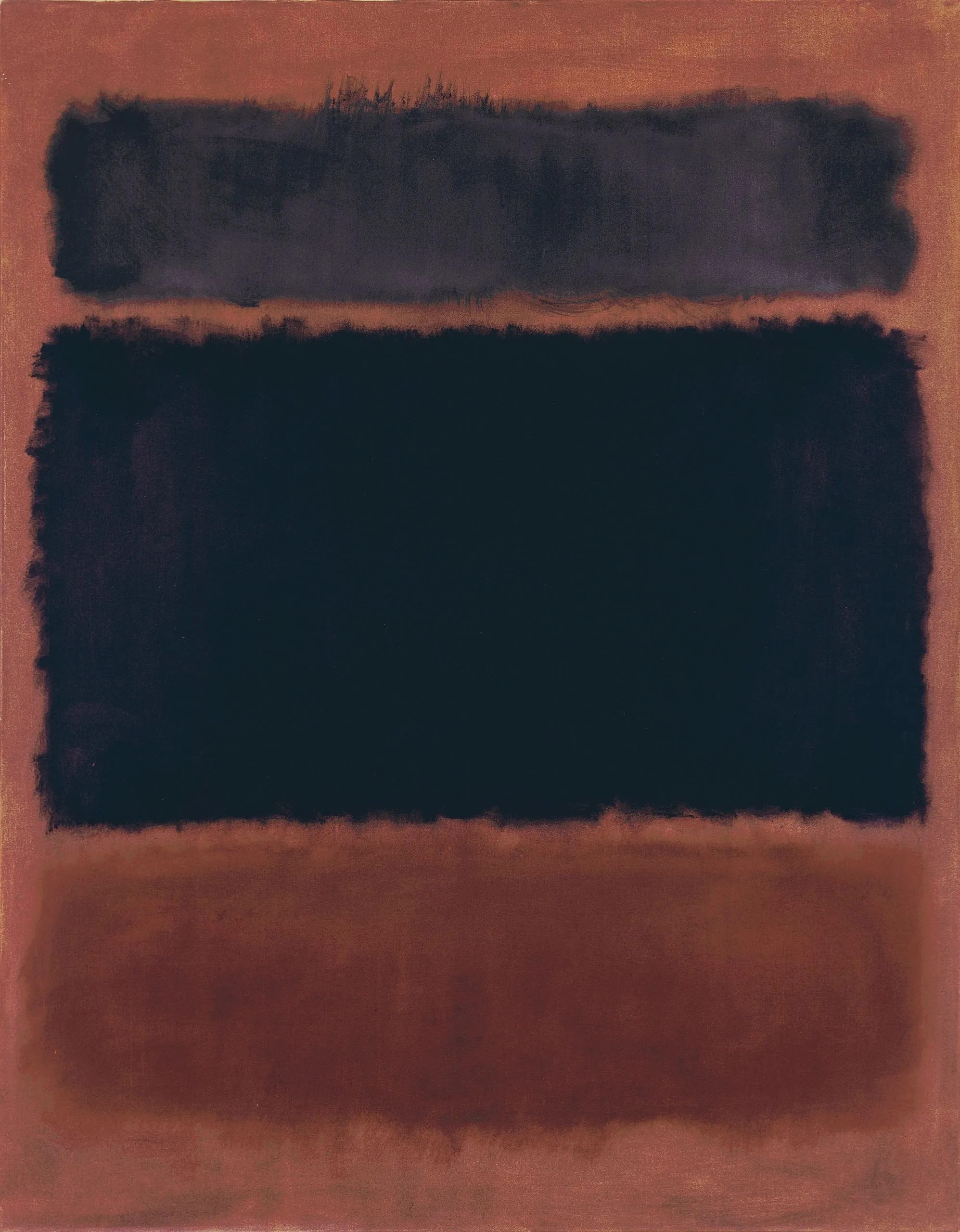
I genuinely find a Rothko stunningly beautiful and calming in person. The refrain of “I could have done that” feels so tired, because well… have you tried? If you did, you might suddenly realized that the abstract impressionist canvas isn’t actually that random or simple, that producing something that feel aesthetically coherent in the midst of that chaos or minimalism is actually much harder than it looks, and that the skill it takes to convey a feeling or beauty, even while defying every other aesthetic standard is part of what the critic who is seeing beauty in the work is appreciating and that this is enjoyable to them. That maybe they aren’t lying when they say they think it’s beautiful, or interesting, or has something to say.
Scott uses the example of a beautiful piece of criticism written by Walter Benjamin about Paul Klee’s Angelus Novus. He then despairs that Benjamin can write such beautiful prose about what Scott then compares to “lukewarm slop” being served at a Michelin Star restaurant. I’ll admit, at very first glance Angelus Novus may look a bit childish, and not like what you probably expect reading Benjamin describe it—but why does Scott leap to thinking Benjamin is essentially bullshitting us and forsaking the “critic’s duty” instead of being curios about how and why Benjamin could have seen such beauty in this kind of work.

Again, I get it. Sometimes critics are doing the equivalent of making up a bunch of nonsense to pad out the 8th grade book-report. But sometimes critics really understand the craft and the history and the context of what they’re looking at, and have honed a sensitivity to art that allows them to see depth and dimension that isn’t immediately obvious to the average person. Is this really so hard to believe? In every other field we expect that someone who dedicates their life to studying a specific thing will likely be able to perceive their field of study in greater detail than someone who hasn’t. Why is art the exception? It isn’t.
How do I know this? Because I’ve experienced it personally. You probably have too. As a young person there were many movies I scoffed at and wrote off because they made no sense to me. I thought 2001: A Space Odyssey was boring and slow devoid of narrative. Why is the beginning just a bunch of apes jumping around and screaming for no reason? Jump ahead—with not even 5 more years of watching movies, more life experience, and a greater sensitivity to the art form and ability to notice the nuance within it—and suddenly I realized what I thought was just a bunch of apes jumping around for no reason actually a comprised of a story one that integrated with the narrative arc of the entire film. That the classical music over spaceships, that I thought was boring the first time, actually did have something to say that was kind of profound. Just because I didn’t perceive this meaning the first time around, does not mean it was not there.
That’s just one example, and I’m not saying every time a critic claims to find beauty or profundity where others don’t that they’re right. Critics go too far when they treat themselves as better than others for enjoying the avant-garde, or look down on people or make them feel shame for not being in-the-know. But I think most of them are not lying to you about their opinions and really do get what they describe experiencing out of the art.
The best critics, like John Berger, often have an ability to invite you into this process with them, treating criticism as an opportunity for expanding the realm of what someone can appreciate rather than a weird sort of status game.
Finally, I’ll close this section by saying that we should not limit our discussions of art to what is ensconced as art within the institutions. The narrative that sees art as having forsaken beauty altogether and replacing it with postmodern in-jokes and ugliness unconsciously ignores all the beautiful legitimate art that happens outside these institutions. It is blind to all the beauty that exists in the new mediums of the 21st century that the academy lags in recognizing. Beauty that’s created in film, music, TV, videos games, by the countless unrepresented artists posting their incredibly work online, and the contemporary impressionist paintings still selling in Asheville for $30,000 deserves to be included in the conversation. All of this art is created and enjoyed by everyday people, and much of it is awe inspiring and beautiful—ironically we often don’t include it in the conversations about “art” because the institutions whose job it is to preserve art history haven’t offered it recognition.
That’s a failure on the part of the institutions, but when the lay person also fails to acknowledge the beautiful art that exists in the quotidien, they fall into the same trap and buy implicitly into the value structure laid out for us by these elite institutions. Let in not be so. Let us transcend a binary where art is defined by the academy and elite auction houses altogether, and where we’re left arguing that they should acknowledge beautiful everyday art so we can treat it as legitimate as well.
A Rationalist Guide To Art
There is, at the heart of this disagreement, a cultural difference. Scott Alexander is one of the most prominent writers within the Rationalist movement out of San Francisco. This movement (as you might guess and at risk of being highly reductive) believes that you can better live and understand the world by striving first and foremost, to be rational.
I am sympathetic towards this cause in theory. There is much irrational behavior in the world that causes harm and suffering, and it is good to try to become aware of our tendencies toward irrationality and overcome them. But where I find this way of thinking often goes astray is where it meets reality. Many of the self-purported rationalists seem to perceive that because they’ve become aware of certain human tendencies toward irrational behavior, they have therefore escaped irrationality themselves. They at times, ironically, seem much more susceptible to certain irrational ideas (like the idea that the best way to protect ourselves from the AI they believe is highly likely to kill us all is to be the ones to create it) precisely because they over-estimate their own capacity for rationality.
I bring this up simply because I see this pattern at play in Scott’s writing about this topic. In his mind, he’s come to peace with the reality that the context surrounding a work effects our perception of it, when to me it doesn’t seem like he’s integrated that into his understand of what art is very much at all. He still seems fixated on wanting to try to define taste independent of the context altogether. The difficulty of accepting the reality that the experience of art is inseparable from its context—seems to me very similar to the difficulty many rationalist appear to have in accepting the reality of their own inevitable irrationality, even as they strive to eliminate it. I don’t mean any of this in a particularly accusatory way, especially towards Scott whose writing I’ve often found compelling despite frequently disagreeing with his conclusions, but I find it interesting that my disagreement with Scott’s view on art, so neatly parallels my issues with the Rationalist movement writ large.
Ultimately I believe, as J.F. Martel argues in Reclaiming Art in The Age of Artifice, that art is simply not rational. Not only is it not rational, it is almost categorically defined in opposition to humanity’s rational impulse.
“Astonishment is the litmus test of art, the sign by which we know we have been magicked out of practical and utilitarian enterprises to confront the bottomless dream of life in sensible form”
Rationality is built on data and practical, utilitarian considerations. Art is the very practice of trying to express and communicate about everything we cannot reduce to data, information, or utility. Part of the mystery of the beauty of art is that it moves us and we cannot quantify exactly why. Some art moves some people and not others, and it can sometimes be difficult or impossible to determine why. Art is the extra stuff that doesn’t serve an explicit purpose in our lives, but which we’re endlessly driven to create and consume because something about the very experience of being drives us to.
It is the primary way humans engage with, explore, communicate about, and cope with the irrational aspects of our existence. Trying to view humanity’s most irrational form of expression through a rationalist lens—trying to treat poetry as something that can be objectively evaluated as opposed to respecting, well, the poetry of it all, seems irrational to me. Exploring art in a rationalist way, and conducting rigorous research about how it works and what constitutes quality is interesting, and may have something to teach us as one facet of how we think about art, but as a comprehensive view, it’s like trying to catch the breeze with a butterfly net.
Seeing Through Film is a reader-supported publication. If you’d like to support the creation of more of this work, consider becoming a free or paid subscriber:
To be clear I don’t think he’s lying to us. I believe he’s accepted this on some level—just that he has not fully and fundamentally integrated this reality into his hermeneutics of art.
Of course you can set up the conditions of experiencing art blindly devoid of context, but this is highly artificial and rare. And should not be the basis of how we think and talk about art. If the food critic blind-taste tests a bunch of food, this actually isn’t that useful to the everyday person because the critic’s audience is not also going to blind taste test the food, they’re going to experience it like everyone else–in the restaurant. So that experience–in it’s totality, is what the critic should engage with and evaluate.
Never mind that in these discussion most of what is getting called “modern art” is not in fact Modern Art as it’s understood an a historical context, but something much closer to a subset-of-a-subset of postmodern art.
To extend this argument, accusing critics of lying when they praise modern art, or postmodern art, or whatever someone's bugbear is, is a dangerous view for so-called defenders of art and beauty to embrace. A regular person unfamiliar with high art, if asked to listen to Bach or watch KING LEAR or read MIDDLEMARCH, might sincerely think, "That's a boring waste of time—who'd want to do that?". Does that honest opinion prove that critics who like these things are dishonest snobs? I would be bored to tears watching football, but I don't (usually) think sports fans are nuts for liking what they like.
Whenever I can be bothered, I try to ask, "What happens if I take something seemingly un-artistic and look for the value in it?"—in short, to change the narrative frame around it. The French New Wave insisted on celebrating "popular" filmmakers like Hitchcock; the Romantics admired Shakespeare for all the eccentricities that neoclassical critics condemned; the MCU has taught me at least as much about cinema and art as watching "great" films has. I think William Blake put it best: maybe the best, or at least most fun, way to look at art is to try "To see a world in a grain of sand/And a heaven in a wild flower".
Great essay! And I'm definitely on your side in the debate. One irony that occurred to me is that while Mark Rothko's work is often held up as a prime example of "Modern/postmodern art is a charade!," it is in a sense exactly what it sounds like Scott Alexander wants to see more of: it is raw sensory experience, with all narrative and context stripped away. If someone loves Rothko, it's not because of some sort of _understanding_ of the _meaning_ of it, but purely for the richness of the visual sensation it offers.
To be fair, I didn't read Alexander's article -- I'm just going off of your summary of it. So I don't know if Alexander even trashes Rothko, or if Rothko is just an example you brought in to the discussion. But assuming that, in any case, there is similar work that Alexander fails to see as providing raw sensory beauty even though it ... well... DOES, I wonder if this reveals a mindset that claims to decry art that relies on context, when perhaps instead the art that this mindset decries is connected to certain KINDS of contexts that the critic doesn't appreciate, while the art that is lauded by such critics relies on OTHER kinds of context that they happen to like, and/or don't even realize is present.